Saturday, August 15, 2026 Facebook | Twitter | Linkedin
Magazine

Mining & Trade News

Malawi Online News
...
Mining

MINING FOR FOOD SECURITY: THE STRATEGIC ROLE OF AGROMINERAL RESOURCES IN MALAWI
August 14, 2026 / with Moses Masingati The author is a geological engineer and exploration geologist with experience in mineral resource exploration and development across Malawi. Contact details: +265 991 24 79 03 Email: masingatimoses@gmail.com
...
Mining

MILITARY INVOLVEMENT IN MINING DRAWS MIXED REACTIONS
August 13, 2026 / Maggie TEMBO
...
Mining

Governing Malawi’s Critical Minerals: Policy Pathways for a Just Energy Transition
August 13, 2026 / Emmanuel Chinkaka, Lecturer and Head of Earth Sciences Department., Malawi University of Science and Technology (MUST)
Mining
CSOs report challenges in Malawi minerals sector to IMF
May 06, 2024 / Wahard Betha

Civil Society Organizations (CSOs) working in the extractive sector have reported to the International Monetary Fund (IMF) the challenges that are dogging Malawi’s mining sector which, according to them, include lack of transparency and accountability; poor implementation of policies; lack of community consultations on Corporate Social Responsibility (CSR) projects, community’s lack of access to vital reports and information and; corrupt practices.

 The CSOs presented these challenges to the IMF team at a meeting in Lilongwe. The IMF was in the country to meet various stakeholders including the CSOs, the Central Bank, the Judiciary and various government agencies to diagnose issues of governance, mining and land sectors.

The IMF team called on the meeting with the CSOs, and the agenda included general rule of law issues; contract enforcement; property rights; and functioning of the judiciary.

Responding to IMF questions on challenges the sector is experiencing, Board Chairperson for Human Rights Consultative Committee (HRCC) Robert Mkwezalamba alleged that Government is not committed in implementation of some policies including inspection of the mines.

Mkwezalamba cited that whenever an issue is reported to the Ministry of Mining or District inspection team, they inform the mining company of their plans to inspect the mine, which gives room to corruption.

 “The Ministry seems to be serious with a mining company when the license expires but when in operation not much is done in terms of inspection.”

On CSR, Mkwezalamba said there is need to ensure that the local communities are given an opportunity to decide on their needs despite it being not compulsory to the company.

He said: “The contractual agreements currently being signed by the Government and multinational companies should benefit the people of Malawi.”

“CSR is an issue considering that it is 100% determined by the companies and the communities have no say.”

“They need to look at the power of the community because at the end of the mining project someone benefits while someone does not despite being impacted.”

On transparency and accountability issues, the CSOs centered on the licensing and signing of mining development agreements whereby they lamented that it remains a challenge to know how the two are awarded.

Coordinator for Natural Resources Justice Network (NRJN) Kennedy Rashid told the team that though results of both the World Bank funded Airborne Geophysical Survey dubbed Kauniuni and Geological Mapping and Mineral Assessment Project (GEMMAP) were launched to the public, the problem remains accessibility of the two.

Rashid said: “The Kauniuni and GEMMAP reports are out but for you to access them you need to buy, and from there you need also to hire a geologist to interpret the technical reports for you.”

“Another challenge with the mining sector is that we have a new that has established the Mining Regulatory Authority law but no regulations hence we are still using the old one.”

 “Of course, when you ask the Ministry of Mining, they tell you they have developed the regulations and are with the Ministry of Justice, the question is how do you develop regulations while you have not funded the Authority.”

The meeting attracted CSOs including; HRCC, the Council for Non-Governmental Organisations in Malawi, NRJN, Sustainable Rural Community Development, Africa Windmill Project, Youth Initiative, Bwezi la Ana Foundation, Civil Rights Advocacy Centre, National Advocacy Platform, CARE Malawi, Tilitonse Foundation, Save the Children, Citizen Alliance, Centre for Mindset Change and Economists Association of Malawi. 

The IMF team was headed by Deputy Division Chief of Fiscal Operations in the Fiscal Affairs Department Kenji Moriyama.

The mission to Malawi through diagnostic analysis is directly linked to the Extended Credit Facility (ECF) of the IMF.

Mining
Environmentalist calls for caution on Lake Chilwa mineral prospecting project
May 06, 2024 / Admin

An environmental activist Godfrey Mfiti has asked ASX-listed Chilwa Minerals, which is prospecting for heavy mineral sands in Lake Chilwa, and the Malawi Government to advance the project with caution in order to protect the environment.

Lake Chilwa Wetland is part of the Tentative list of Malawi in order to qualify for inclusion in the World Heritage List.

The Wetland is important for its waterfowl population. The lake has no outlet, and the level of water is greatly affected by seasonal rains and summer evaporation. It is also used extensively for fishing and bird hunting by the local communities as the Wetland Biosphere Reserve is home to one of the world’s most diverse populations of bird species.    

Mfiti, an environmental policy analyst, says in an interview with Mining & Trade Review that there is need for proper environmental management in executing the mineral prospecting project in such an environmentally sensitive area.

“It is important to balance development and conservation in sustainable ventures like Lake Chilwa project,” he says.

He points out that one main challenge in mining projects is decommissioning, whereby miners leave the mining location neglecting environmental rehabilitation.

“We are aware that Lake Chilwa is heavily hit by climate change and environmental degradation whereby the area along Domasi and Matandani Rivers lost several dykes during Cyclone Freddy induced floods. Therefore, if this project is not handled properly, it will in the long-run heavily impact on the communities in Traditional Authority Kuntumanje in Zomba who are already at the receiving end of the negative effects of the project,” says Mfiti.

He suggests that as the project is progressing, stakeholders including the investor Chilwa Minerals should work closely with environmental specialists, policy holders and local authorities to ensure that it is conducted with utmost respect to Environmental Management Act of 2017 and community well-being.

Meanwhile, Chilwa Minerals has appointed Light Deep Earth (LDE), a South African-based company, to conduct metallurgical test work on samples extracted from the Mposa Deposit, located within the wider Lake Chilwa Project.

Chilwa Minerals MD Cadell Buss says in a statement that the metallurgical test work will be overseen by leading Perth based Mineral Sands Consulting firm TZMI, which previously completed work on the 2015 Lake Chilwa Scoping Study for the former owners of the project.

Buss says the primary goal of this testing phase is to validate and enhance the findings of previous studies.

“The focus of the metallurgical test work is to confirm previous results as well as identify optimisation improvements. Rather than stopping at the production of a mineral sands concentrate, the test work will assess the potential to produce individual mineral sands products,” says Buss.

He says samples from an ongoing drilling program will be delivered to the LDE laboratory in the upcoming weeks, with testing anticipated to take approximately three months.

“The results are expected to be disclosed approximately one month after the completion of the testing phase,” says Buss.

He explains that the commencement of the metallurgical test work marks another step forward in the company’s commitment to unlocking the full potential of the Lake Chilwa Heavy Mineral Sands Project. 

“The current metallurgical testing phase is a critical milestone that offers valuable insights into the deposit’s potential, promising to provide a foundation that guides the project’s future path,” says Buss

The Malawi Government is implementing a strategy to develop agriculture, mining and tourism sectors hence encourages resource firms to put in place measures to conserve the environment and attract tourists while pursuing the minerals.

Mining
Metallurgical test work on Kangankunde rare earths samples confirms high recoveries, concentrate grade
May 06, 2024 / Marcel Chimwala

ASX-listed Lindian Resources, which is conducting mine development studies for rare earth elements (REEs) at Kangankunde in Balaka, has announced that an ongoing metallurgical test work programme that is now close to completion has affirmed both high recoveries and concentrate grades.

Lindian Executive Chairman Asimwe Kabunga explains in a statement that the test work has affirmed recoveries of 70% total rare earth ore (TREO) achievable and concentrate grades ranging from 55% to 68% TREO, which confirms the globally superior quality of Kangankunde.

Kabunga says: “We are pleased to again confirm high recoveries and concentrate grades from our extensive metallurgical test work program which has been ongoing for the past 12 months and is now nearing completion.”

“The results are key for defining operational expenditure (OPEX) for our pending Feasibility Study for Stage 1 mine development and will be instrumental in benchmarking Kangankunde’s concentrate grade and recoveries against existing producers. We expect that the results will showcase Kangankunde’s very robust project economics.”

Lindian’s Chief Executive Officer, Alistair Stephens explains that these metallurgical results clearly demonstrate an advanced understanding of input parameters and material variability necessary for Kangankunde’s pending Stage 1 Feasibility Study.

“We are very encouraged by the results. We anticipate that we will also report final assay results for the Indicated Resource definition, and complete mine design and mining schedules this month. We are very close to the final stages of the construction contract for Kangankunde’s Stage 1 development, and we are confident this will confirm Stage 1 as a low-cost start-up operation,” says Stephens.

Further high-grade intersections from Kangankunde infill drilling

Meanwhile, Lindian has also reported that assay results received for a further 14 holes of the Phase 3 infill drilling program continue to define mineralisation continuity.

The Phase 3 program included 45 drill-holes for 4,886 metres, and the assays reported within are from a total of 14 drill holes reverse circulation (RC) holes.

Stephens reports that all holes assayed demonstrate extensive intersections of mineralisation to end of hole, are non-radioactive and have significant percentages of critical REEs neodymium and praseodymium (NdPr).

Significant intersections include:

? 119 metres @ 3.77% TREO from surface to EOH in KGKRC090

? 120 metres @ 3.66% TREO from surface to EOH in KGKRC116

? 80 metres @ 3.59% TREO from surface to EOH in KGKRC118

? 150 metres @ 3.38% TREO from surface to EOH in KGKRC113

? 100 metres @ 3.29% TREO from surface to EOH in KGKRC121

? 80 metres @ 3.29% TREO from surface to EOH in KGKRC117

He reports that the average grade of rare earths critical metal elements neodymium-praseodymium (NdPr) are over 20% of TREO.

Stephens says: “The results from this infill drill program further demonstrate Kangankunde’s excellent characteristics – high grade, which is consistent across very broad intersections, a high NDPr ratio, and of course, the material is non-radioactive, a unique feature of the asset.”

“Results from the final 10 holes will be reported very soon and we will then be able to define an Indicted portion of the MRE as part of our Feasibility Study.”

Kabunga comments: “All the elements for our Feasibility Study are now rapidly coming together with these infill drilling assays being an important component of this. We look forward to reporting the Stage 1 Feasibility Study very soon, and in quick succession, commencing construction works.”

Drill assay results

In August 2023, Lindian announced its maiden Mineral Resource Estimate (MRE) for the Kangankunde Rare Earths Project of 261 million tonnes averaging 2.19% TREO above a 0.5% TREO cut-off grade.

The infill holes reported are designed to provide sufficient data to increase the confidence level of a portion of the mineral resource estimate (MRE) to Indicated status.

Lindian says in the statement that once the remaining assay results are received the resource model will be updated and applied to detail mine design and scheduling.

The areas targeted by the Phase 3 infill program are those considered most likely to define initial feed for operation of the Stage 1 Processing facility. These are; the northern area of the central carbonatite complex, the western area of the central carbonatite complex; and the south-eastern area of the central carbonatite complex.

Lindian’s team is, meanwhile, on the closing stages of completing the preferred provider in relation to the tender of works and contract terms.

The near term milestones for the company include infill drill program assays, Indicated Resource Estimation, Mine Design and Mining Schedules, determination of Capital estimates and Contract awards, and execution of the Feasibility Study.

 • Samples from the final 10 holes are currently at laboratory and will be reported shortly

Mining
Mining has potential to replace tobacco as Malawi’s major forex earner – World Bank
May 02, 2024 / Modester Mwalija

The World Bank says Malawi’s mineral exports have the potential to replace tobacco as Malawi’s top foreign exchange earner within six years of production.

This is outlined in the 2024 Malawi Economic Monitor report released by The World Bank.

The report establishes the promise of mining exports to fuel economic development and validates the sector’s role as a central driver of growth and industrialization.

The report further emphasizes that mining can contribute significantly to the country’s public revenues.

“Potential fiscal revenues could contribute to more than 10 percent of total public revenues,” the report reads.

However, the report shows that the promise of mining will take some years to fully materialize and hinges on adequate policy.

“The pace and progression of mine development in Malawi relies not only on the technical aspects of the projects but equally on the governance of the sector,” explains the report.

It says key factors such as an appropriate fiscal regime, streamlined permitting, strong community engagement, and sufficient infrastructure will shape the mining sector’s trajectory as highlighted in the report.

While mining presents promising opportunities, the Brettonwood institution acknowledges that translating the proven resources in the ground into wealth for ordinary Malawians remains a critical challenge.

“The capital-intensive nature of the mining industry limits potential employment, with the researched projects only expected to generate 20, 000 jobs,” it says.

The report, therefore, highlights the importance of not neglecting other employment-intensive sectors and cautions the country against falling into the “presource curse” trap, where mining revenues are spent prematurely before they materialize.

The report states: “The government also needs to avoid falling victim to the “presource curse,” by spending mining revenues which may never materialize”.

Amidst the ongoing economic crisis, the report notes that Malawi has seen a decrease in imports of fuel and fertilizer compared to pre-crisis levels, even though their share in the total value of imports has been rising.

“Recent revisions of Malawi’s trade data show that fertilizer and fuel accounted for 27.1 percent of imported value since the start of 2022, compared to 18.8 percent two years earlier. However, this still represents 6.1 percent fewer liters of fuel and 30.6 percent fewer bags of fertilizer, reflecting the substantial increase in the cost of both commodities over the past two years,” reads the report.

Mining
Malawi records dramatic increase in coal production
May 01, 2024 / Modester Mwalija

The Malawi government says it has recorded an increase in coal production from 30,250.76 tonnes in 2021 to 62,166.06 tonnes in 2022 reflecting a 106 percent increase.

This is outlined in the 2022/2023 annual economic report published by the Ministry of Finance and Economic Affairs.

The report attributes the rise in coal production to high resumption of industrial activities after recovering from Covid-19 pandemic and improvement of some companies’ production through optimizing their operations with improved equipment and processes to meet rising demand during the period.

However, the report states that it was not been all rosy in the cement industry as there was a 40.3 percent decline in production of limestone, the major ingredient in cement, compared to the previous reporting period.

The report reads: “Shayona Cement Factory and Cement Products Factory produced 277,979.36 tonnes of limestone, representing a 40.3 percent decline in production compared to the previous reporting period. Similarly, iron ore production fell by 80.3 percent, with only 981.61 tonnes produced in 2022.”

“This was largely driven by high production costs in cement manufacturing and competition with cheaper cement that is smuggled into the country.”

The report also notes that despite awarding more mining licenses in rock aggregate, production declined by 36 percent. A total of 504,536.04 tonnes were produced in 2022 compared to 783,416.55 tonnes in 2021.

“This is because a number of the new quarries were in the construction phase and hence had not commenced quarrying activities. Furthermore, some project quarries delayed to commence production due to shifting timelines of civil construction projects.” the report reads.

Meanwhile, the report states that rock aggregate production is expected to increase as more civil construction projects are in the pipeline and the general public continues to embrace concrete products.

In the current financial year, the government plans to maintain public engagement on mining issues through social media, mainstream media, and other public forums, review the Mines and Minerals Policy to create a more attractive investment climate in the country and develop a National Strategy on Mineral beneficiation and value addition in order to foster productivity, transparency, and accountability of the mining sector so that it contributes significantly to inclusive wealth generation and economic growth in line with the 2063 Vision.

Agriculture
Sovereign rolls out sustainable farming initiative in Kasiya
April 01, 2024 / Modester Mwalija

ASX-listed Sovereign Metals Limited, which is prospecting for Rutile and Graphite in Kasiya area in Lilongwe, has announced that it has commissioned a Conservation Farming Program in Malawi.

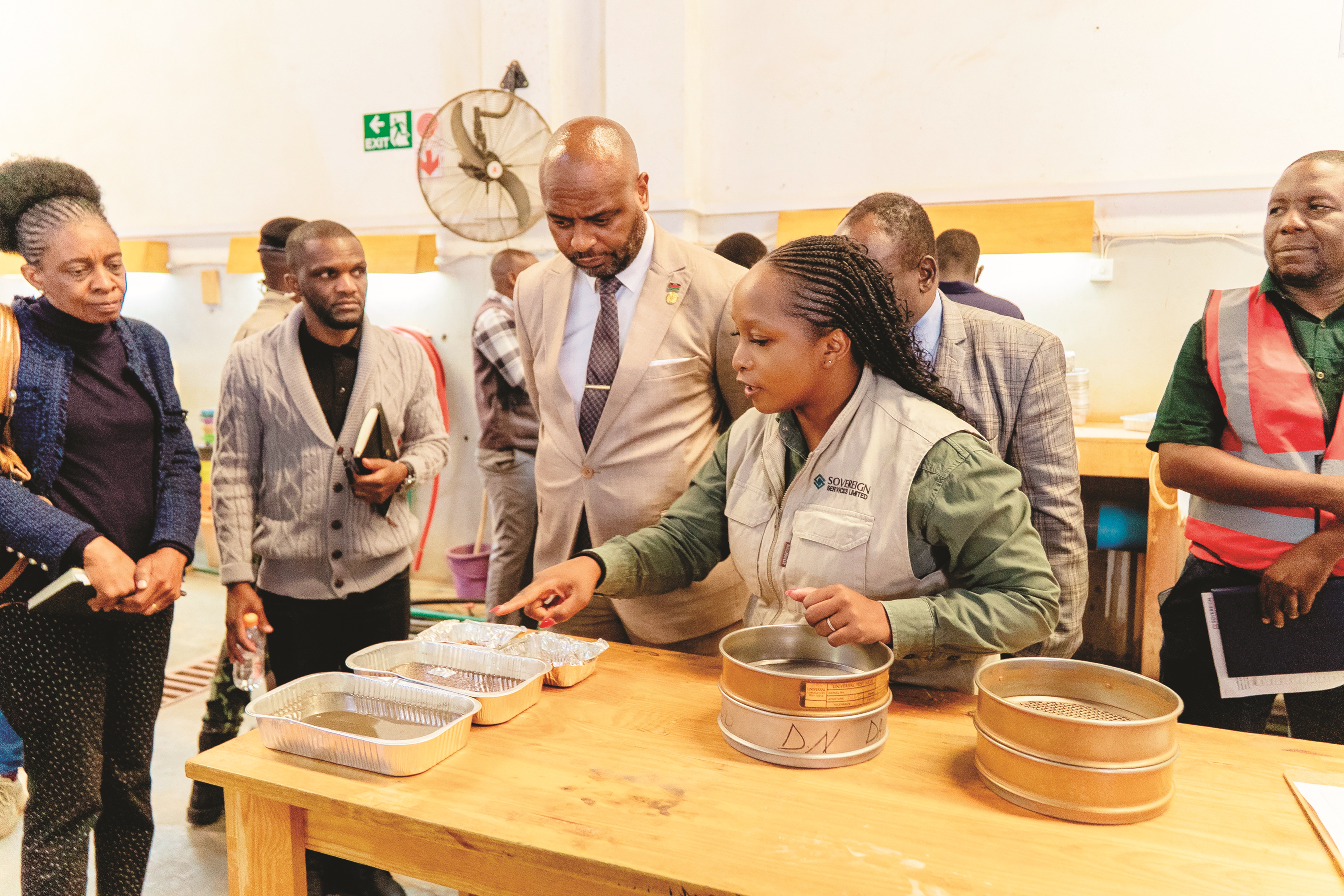
Sovereign Metals MD Frank Eagar says in a statement that the initiative forms part of Sovereign’s Environmental, Social, and Governance (ESG) Strategy to develop its tier one Kasiya Rutile and Graphite Project while simultaneously restoring and improving the livelihoods of local communities.

“The Program is being implemented by the Company’s experienced team on the ground, which previously ran a very successful initiative for First Quantum Minerals Limited’s Zambian operations where its conservation farming program has been effectively operating since 2010. Between 2020 and 2022 harvest crops increased by 67% from 6,000 tonnes to 10,000 tonnes of maize, with over 7,000 farmers in the program at the end of 2022” says Eagar.

He says that Sovereign has commissioned the initial Program for 90 Malawian maize farmers from within the project area, of which at least 50% are female.
“The Program is to provide training in low-input-cost, high-yield sustainable farming techniques, with the aim to provide a platform for the farmers to increase yield and productivity therefore helping to reduce malnutrition and poverty,” states Eagar.

Conservation farming as a system aims to protect soil from erosion and degradation and increase crop yields. It involves three main principles namely; minimum soil disturbance, such as no-till farming; maintenance of a permanent soil cover, such as cover crops or crop residues; and diversification of plant species, such as crop rotation.

Meanwhile, the company has also announced three senior appointments and promotions across its key legal, permitting, and technical functions in Malawi.

“The appointments have strengthened the Company’s in-country capabilities as it continues to advance its Rutile and Graphite Project in Kasiya”, says Eager.

Mr. Maxwell Kazako has been appointed Acting In-Country Manager following the promotion of Frank Eagar to Managing Director while Ms. Natasha Namisengo has been appointed General Legal Counsel, Mr. Pilirani Bangula as Legal Counsel – Compliance while the Company has also promoted Ms. Tupoche Kayange to Laboratory Manager in line with its employee training and development program.

Eagar says Sovereign understands Kasiya’s significant potential to deliver material and long-lasting social and economic benefits for Malawi, including fiscal returns, job creation, skills transfer, and sustainable community development initiatives.

He says: “Sovereign also recognizes the importance of training programs to enhance the capabilities of its employees. The Company has structured training and skills transfer programs, covering on-the-job training for full-time employees and programs for local graduates and interns.”

“These appointments and promotions align with the Company’s initial targets, ensuring equal opportunity and fairness in employment.”

Sovereign employs over 80 individuals in Malawi, with at least 30% of the staff being women.

Kasiya’s current mineral resource estimate (MRE) of 1.8 Billion tonnes, at 1.0% rutile and 1.4% graphite, comprises broad and contiguous zones of high-grade rutile and graphite that occur across an area of over 201km2 while the company also recently identified an 8km extension of mineralisation to the south, which remains open along strike and at depth.

Results of the Pre-Feasibility Study (PFS) released in late 2023 demonstrated Kasiya’s potential to become the world’s largest rutile producer at an average of 222kt per annum and one of the world’s largest natural graphite producers outside of China at an average of 244kt per annum, based on an initial 25 year life-of-mine (LOM).

The Kasiya PFS indicated compelling economics with a post-tax NPV8 of US$1.6 Billion and a post-tax IRR of 28%. This long-life, multi-generational operation was modelled to initially generate over US$16 Billion of revenue and provide an average annual EBITDA of US$415 Million. The PFS modelling was limited to 25 years with initial Probable Ore Reserves declared of 538Mt, representing only 30% of the total MRE.

Mining
Jewish firm refining Malawi’s gold
April 01, 2024 / Wahard Betha

A global conglomerate of Jewish companies of a cross-sector industry portfolio, the Inosselia Group, is the one refining gold which the Malawi Government is purchasing from local artisanal and small scale miners (ASMs) through Export Development Fund (EDF), a subsidiary of the Reserve Bank of Malawi (RBM), Mining & Trade Review has established.

As a way of expanding its global footprints in both mature and emerging markets across Europe, Middle East and Africa, the Group has its local base in Lilongwe close to Kamuzu International Airport (KIA).

Apart from pursuing agricultural investments including mega farms, Inosselia has set up a well-equipped and standard gold refining facility.

President Lazarus Chakwera recently informed the budget meeting of the National Assembly that the RBM has commenced the process of purifying gold with assaying. 

In his address, Chakwera told the house that the process is being done locally with a local gold refining company located at Kamuzu International Airport in Lilongwe. 

The statement raised eyebrows of some stakeholders including in our social media groups who were interested to know who owns the refinery, why it is located at the airport and also the agreement that the owner has with the Malawi Government.

EDF Manager for Precious Stones and Minerals Elyvin Chawinga explained to Mining & Trade Review in an interview that the refinery is located close to the airport but not within KIA premises.

Chawinga disclosed that EDF chose to purify the gold at the company because no any other company within the country had the capacity of refining gold.

She also said EDF assigns the company on one time off basis and that no agreement was signed between the company and the Malawi Government. 

Chawinga said: “The refinery is entirely a private entity and there is no any agreement that is there between government and the company.”

“What we do is that we take the gold in raw form and give them. We inspect the process of refining and we take the product which is in bar form back to Reserve Bank for storage.”

“If another company comes in with a refinery, we are free to choose which one to use at that particular time.”

Since the structured gold market commenced in May 2021, RBM has purchased a total of 187 kilograms of smelted and assayed gold at a total cost of MK19.2 billion, and with a total value of MK22.1 billion.

The gold is currently being held within RBM and undergoing further refining process and casting into gold bars to be part of the official reserves.

Commenting on the concern of why the gold is not being sold due to the foreign exchange challenges the country is experiencing, Chawinga asked for patience from Malawians saying the Reserve Bank governor will decide the opportune time to sell the resource. Chawinga said a decision to sell will be made when gold

Mining
CEPA drills stakeholders in extractive governance
April 01, 2024 / Wahard Betha

Stakeholders in Malawi’s extractive sector had an opportunity to share knowledge and experiences on issues of transparency and accountability with colleagues from the Southern Africa region thanks to a workshop that a civil society group the Centre for Environmental Policy and Advocacy (CEPA) through the UNIKA-Strengthening Transparency and Accountability in the Malawi Extractive Sector Project hosted in Lilongwe.

The workshop was aimed at equipping stakeholders from the extractive sector with knowledge and experience on how they can strengthen extractive governance.

It was organized under the theme of ‘Strengthening Natural Resources Governance through Shared Learning.’

The workshop brought together players from Civil Society, members of the Extractive Industry Transparency Initiative (EITI) Multi Stakeholder Group (MSG) in the Eastern and Southern African (ESA) countries, Malawi government and the Media. 

Executive Director for CEPA Herbert Mwalukomo hailed the meeting saying it provided a platform where local players learnt how stakeholders handle issues of transparency and accountability across the southern Africa region.

Mwalukomo also said the workshop enabled players to deliberate on how the extractive sector is benefiting locals in various mining areas across the country.

He said: “Ultimately we are looking at how Malawi is benefiting from the extractive industry. So this workshop is all about learning from our colleagues in the region in terms of what they have done in upholding issues of transparency including tax justice.

“That is why we have invited even colleagues from Tax Justice Africa to share experiences from the entire African region so that we can use those lessons in applying good practices in Malawi.”

“As you know as a country we have just established a company that will be working under Malawi Development Corporation to try and run own projects or own shares in some of the companies that are in the extractive sector. So the question is how can we make use of that opportunity to ensure that we do not go through the same old terrain where we were actually ripped off as a country?”

“We have to make sure we are doing it equitably and that communities around the projects are getting maximum benefits, at the same time we have to ensure that the country is attractive to investors from all over the world.”

CEPA invited members of EITI MSG who are also under Publish What Your Pay (PWYP) representatives from countries such as Zambia, Tanzania and Uganda.

Malawi joined EITI and adopted the EITI framework in 2015 to be part of the global standard. MWEITI is coordinated by the Secretariat under the Ministry of Finance and Economic Affairs, and brings together different players in the sector.

In his remarks, Leonard Mushane from MWEITI Secretariat lauded the 2023 EITI Standard saying it has huge impact on the extractive sector of the country.

Mushane said unlike the previous EITI Standard, the new standard incorporates new crucial areas including gender and energy transitions.

He also said despite having a panicking economy, Malawi is doing fairly well in terms of tax justice compared to other developing countries.  

Mushane said: “From my understanding in terms of tax justice, the country is not doing entirely bad because looking at our tax base we cannot compare it with developing countries since we have a small economy.”

“Our system is doing well because those that earn more pay higher taxes than those who earn less,” he said.

He, however urged mining companies to ensure that they conduct a larger part of their mineral processing activities within the country to maximize their contribution towards the Malawi’s economy.

 “We hear issues of externalization of funds, transfer pricing, a lot of tax planning with these multinational mining companies. So we need to do more so that we can protect our economy and our tax system,” said Mushane.

But Mushane lamented that MWEITI Secretariat is facing numerous challenges including lack of financing and understaffing, which are weighing in on its activities including dissemination of EITI reports.

“We are not able to reach out to the ground. People do not know much about our reports because of financial challenges that have also triggered lack of networking with CSOs,” he said.

CEPA organized the workshop with funding from Southern Africa Trust, an independent non-profit organization and grant making entity.

Commenting on the progress of the UNIKA project, Communication and Research Associate for Southern Africa Trust Moyna Mwenye said she is impressed with how CEPA is spearheading the transparency and accountability aspect in Malawi’s minerals sector to benefit and safeguard lives of communities.

Mwenye said: “Our specific interest to work with CEPA is to ensure that people’s lives are being safeguarded.”

“Whatever companies in the extractive sector are doing directly impacts communities on the ground, and these people need to be informed about mining projects in all stages.”

“That is why we are working with CEPA as well as other partners in Malawi and other countries to ensure that whatever happens on the ground is transparent, people know the impact, are participating and also contributing in reducing their poverty and levels of inequality,” said Mwenye.

Southern Africa Trust is currently working to support partners in the Southern Africa Developing Community (SADC) region in various thematic areas including gender justice, climate justice, youth empowerment, resources governance and socio-economic recovery.

The workshop covered areas such as beneficial ownership disclosure, EITI regulatory framework and tax justice.

Mining
Thumbs up Globe Metals for deciding to refine Kanyika ore within Malawi!
April 01, 2024 / Marcel Chimwala

We welcome news that ASX-listed Globe Metals & Mining has finally decided to set up a refinery for the Kanyika ore in Lilongwe rescinding its earlier decision to refine the ore outside Malawi.

We thank Globe Metals for making this important decision despite having both the mining license and mining development agreement which legally empowers them to start mining at Kanyika.

As reported in our front page article, this announcement by Globe meets Malawians long-expressed wishes for local value-addition, instead of seeing the country’s mineral resources routinely exported overseas to be transformed into high-value saleable products.

By producing Niobium and Tantalum oxides within Malawi for export to world markets, the Kanyika Mine will add significantly to the country’s foreign exchange earnings, boosting the Balance of Payments account and raising the National Gross Domestic Product.

We also feel this refinery will provide lots of jobs to Malawians which would have been lost if processing of this ore was to be conducted in Namibia.

In addition, the setting up of this refinery in Malawi will assist in capacity building of the locals who will acquire knowledge and skills from expatriates engaged at the facility.

Setting up of this refinery in Malawi will also assist Government to easily monitor the products from the ore as the Kanyika deposit contains niobium, tantalum, uranium and zircon.

We, therefore, appreciate the efforts by the Malawi Government to convince Globe Metals to set up this refinery within Malawi.

We share the view of the Malawi Government that local value addition is the way to go for Malawi if the country is to fully reap from the potential of its mineral sector.

The country is producing graduates in mining related courses such as metallurgy who are expecting to get jobs and the best way to create jobs for them is to establish laboratories for mineral processing and refineries within Malawi.

Countries in the region such as Zimbabwe, Tanzania and Zambia are encouraging local value addition so Malawi does not have to lag behind.

The current hype in exploration activities for industrial minerals such as niobium and rare earths is a clear indication that Malawi has enormous potential for these minerals so it is important that Government should uphold strict local content policies to maximise benefits for the nation.