Friday, August 14, 2026 Facebook | Twitter | Linkedin
Magazine

Mining & Trade News

Malawi Online News
...
Mining

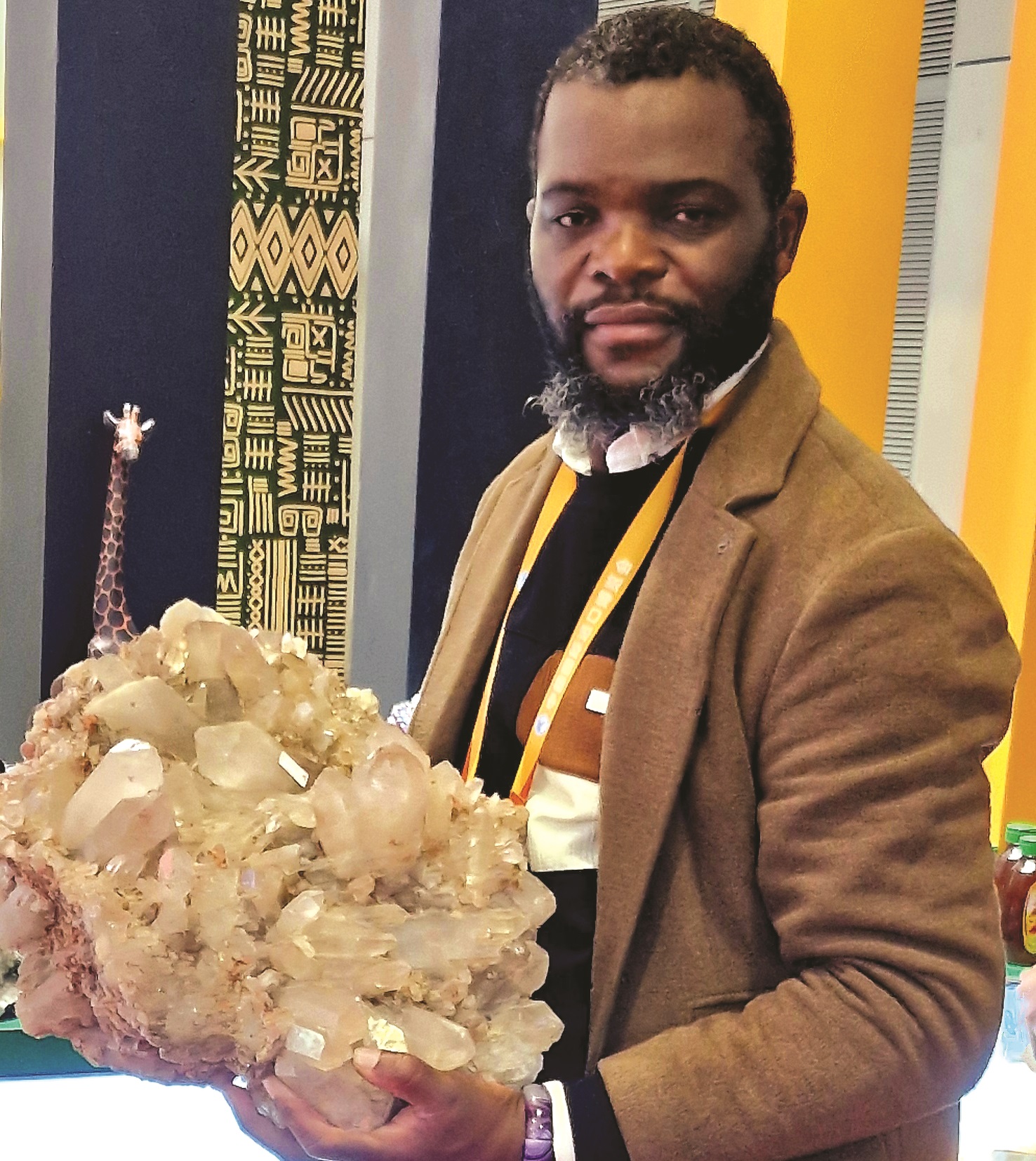
MINING FOR FOOD SECURITY: THE STRATEGIC ROLE OF AGROMINERAL RESOURCES IN MALAWI
August 14, 2026 / with Moses Masingati The author is a geological engineer and exploration geologist with experience in mineral resource exploration and development across Malawi. Contact details: +265 991 24 79 03 Email: masingatimoses@gmail.com
...
Mining

MILITARY INVOLVEMENT IN MINING DRAWS MIXED REACTIONS
August 13, 2026 / Maggie TEMBO
...
Mining

Governing Malawi’s Critical Minerals: Policy Pathways for a Just Energy Transition
August 13, 2026 / Emmanuel Chinkaka, Lecturer and Head of Earth Sciences Department., Malawi University of Science and Technology (MUST)
Cartoon
January Cartoon
January 22, 2020 / Admin
Mining
Mineral Resource Revenue Management and Distribution from Mining
January 22, 2020 / Ignatius Kamwanje

Mineral resource revenues are special because they are finite, volatile and if they are large enough, they can easily impact other industries and paralyse them. They also generate large economic rents and are location-specific, which can lead to conflicts over their control in other areas. As a result, they may need to be managed and distributed differently from other types of government revenue.  There are various techniques that governments can employ to respond to the special challenges of natural resource revenues in a country like Malawi. These among others include;
  • state-owned enterprises.
  •  subnational jurisdictions.
  • distributing revenues to natural resource funds.
  • the national budget, or directly to citizens in the form of cash. Each of these institutions requires a unique management strategy.

Natural Resource Revenue

Many countries do not see their expected returns of social and economic development when they discover mineral resources. This challenge is in part linked to how the countries manage the natural resource revenues, or the money received by the government because of the extraction or sale of natural resources. The reader must understand that mineral resources are unique and to understand the uniqueness there are characteristics that make them to be in such a state and belong to a special way  as compared to other natural resources for a country. Below are some of the selected few  properties that make mineral resources uniquely identified;

  1. Mineral Resources are volatile.

 Prices of natural resources like minerals, fluctuate with respect to market forces. When government revenues are tied to natural resources, their revenues will fluctuate accordingly. In this case,volatility is amplified by  production cycles of mining and unexpected stoppages. This makes the mine planning or the countrys development planning difficult and may lead to company’s/countries go into debt when revenues decline in order to maintain the same standard of living as before the downturn. Volatility can create problems because it means public expenditure becomes less effective than it was before so countries must try to put in place mechanisms that can minimise this kind of risk because the end result to this  is poor investment decisions and higher probability of debt crises.

2. Mineral Resources are Non Renewable ( Finite).

Each mining project cycle has a life span called the Life of Mine(LOM) upon reaching the Goodbye Cut. This is usually so many years but mostly less than 50 . While new technology or exploration generates new discoveries, ultimately mineral resources are finite because they cannot be renewed once and for all. Some countries have experienced large economic booms during their peak production phase of the mineral resources both in areas of operation and the country as a whole but ultimately, only to fall into poverty as soon as the resources are fully exhausted. An example in Malawi is the mining town of Karonga from Kayelekera Uranium Mine  in the north where there was an economic boom but later phased out slowly due to its temporary closure (under Care and Maintenance) and also the phosphate exploited and entirely depleted in the tiny Island of Nauru in Oceania.

3. Mineral Resources can damage other industries.

When mineral resources are discovered, they can represent a large percentage of the country’s GDP and government revenues. If the economy does not have the absorptive capacity to make efficient use of these revenues, the result can be inflation or exchange rate appreciation. This increases the cost of domestically produced goods in foreign markets, especially manufactured goods, harming exporters. Also, the large revenues in the private sector often attract skilled workers to extractive industries like mining. When the number of skilled workers in a country is small, this can make it more difficult for other sectors to find expertise. Together these trends can make it more difficult for other industries to successfully operate and can make a country more dependant on natural resources like minerals. Together, these effects are often referred to as Dutch disease. In other words, Dutch disease leads to accumulation of wealth from resources like minerals and the consumption that comes from that wealth leads to a demand for a lot of non-traded goods and this pulls resources away from other internationally traded goods that would be competitive.

Politically a Dutch Disease is a highly valued resource that acts as a natural rent which is just as income that is free. It’s a massive wealth that can sometimes lead to internal conflicts of a country.

4. Mineral resources can be large and geographically concentrated.

Mining revenues can be enormous relative to the size of an economy, yet, as a capital-intensive rather than labour-intensive industry, they tend to employ only a very small portion of the population. This is often misaligned with the expectations of the communities that surround the extraction point. Furthermore, the profits can be captured by a selected few or be exported to foreign investors. This can cause frustration and unnecessary expectations among locals, leading to conflict, especially in the region where the mines are located. The large amount of profits from a single source is vulnerable to state capture or government mismanagement unless oversight mechanisms are in place.

Some selected institution for management and distribution of revenue in mineral resources

Revenue distribution refers to the manner in which a government allocates, or distributes, natural resource revenues to different levels of government, institutions, or directly to citizens. Some of the decisions of where to allocate revenues are fundamentally political. Economic efficiency criteria consider questions of the absorptive capacity of different levels of government, whether individual citizens have access to the ability to save transfers, and how costs differ over different locations or sectors. Combining the economics with the political analysis can be challenging, particularly when trying to respond to the special qualities of natural resource revenues realised from extractive sector like mining. For instance, allocating an appropriate percentage of revenues, determined by an economic formula, to a long-term savings fund can help mitigate Dutch disease and improve national spending efficiency, though it can also starve the government of much-needed development financing. Allocating some revenues to subnational governments may also improve local service delivery. However in allocating resource revenues directly to citizens, it may reduce poverty and improve natural resource revenue accountability. Therefore governments, with input from citizens, must decide how to manage risks and opportunities in the sector. Allocation of revenues is only part of a bigger picture and mining related/natural resource revenue institutions should have established procedures or principles to plan, organize staff and control their operations. These activities are referred to as revenue management, as opposed to revenue distribution, which simply refers to the allocation of revenues. Some key institutions that manage resource revenues are:

(a) Natural resource funds.

Governments can establish special extra budgetary funds—outside the regular budget process—to manage natural resource revenues such as from mining of a mineral resource. When these funds are used to invest at least partly in foreign assets, they are referred to as sovereign wealth funds or natural resource funds. Ideally, the government dictates how much to deposit and withdraw from these funds by fiscal rules. Sometimes governments that are dictatorial ones, manage these natural resource funds willy nilly without clear rules or objectives.

How successful are natural resource funds

  • When they  are established with clear objectives
  •  Strong fiscal and investment rules
  •  Division of responsibilities between actors.
  •  Sufficient disclosure for proper oversight.

(b) State-owned enterprises

 State-owned enterprises are companies that are more than 50 percent owned and operated by the government. In mining, state owned enterprises can play an important role in revenue management, as natural resource revenues often pass through them on their way to the budget, or there are large budget allocations of mineral revenue to these. Countries often find them attractive, as  national mining companies can generate revenues for the state and serve other functions, such as training domestic workers and improving sector control e.g. Botswana. However, there is a risk that State Owned Enterprises can act as a drain on government finances or become a financial risk and thus they can divert scarce government revenues away from public investments in other sectors. They are also responsible for non-fiscal expenditures that can be an inefficient use of public resources, such as Corporate Social Responsibility (CSR) projects. If a government clearly establishes the fiscal relationship between these state owned enterprises  and the budget, it can work better to avoid  problems.

Mining
800MW required to power minerals sector
January 22, 2020 / Wahard Betha

The Ministry of Natural Resources, Energy and Mining says a minimum of 800 MW of energy is required to power the mining sector.

The Ministry said this during a stakeholder’s workshop on the identification and prioritization of advocacy in the implementation of the National Energy Policy which was held at Sunbird Capital Hotel in Lilongwe.   

The Electricity Generation Company (EGENCO) produces an average of 363.75 MW against a demand of over 450 MW which is expected to grow to over 1000 MW by 2020 this year.

In a report presented at the workshop dubbed ‘Status of energy sector in Malawi,’ the Ministry explains that the Government has embarked on various initiatives to attract private investors in the power generation industry.

It leads: “Some of Government’s interventions to allow private sector participation in the power industry include: Amendment of Electricity Act; development of the Independent Power Producer (IPP) Framework; conduction of Cost of Service Study; conduction of feasibility study; development of an Integrated Resource Plan (IRP) and; construction and rehabilitation of transmission and distribution lines and substations for evacuation of power.”

The report indicates that the country has a huge potential to increase hydropower generation capacity to 1, 300 MW.

There is also potential for coal-fired power generation and renewable energy including solar energy, wind, geothermal and mini/micro hydro.

It says despite such potential, 99% of the nation’s electricity is generated from hydropower stations cascaded on the Shire River.

Meanwhile, the Ministry has signed a Power Purchase Agreement (PPA) with an investor to develop a wind energy project at Lunjika in Mzimba and conducted resource mapping across the country for development of solar power, geothermal and mini hydro power stations.

“The country receives 2, 640 sunlight hours in a year with annual average insolation levels in the range of 5.21 to 5.79metres kWh/m2/year.”

“There is also potential for wind energy with measured annual average wind speeds of 3.8 to 4.0 m/s at 10m heights; 12m/s in Chikangawa and at 70metres in Bolero, Rumphi,” reads the report.  

Besides the mining sector, other sectors that are yearning for increased power supply include: Tourism, education, banks, ICT, hospitals and offices, all requiring a minimum of 500MW.

The Green Belt Irrigation Initiative requires a minimum of 130MW; manufacturing and processing industry demands not less than 700MW while domestic demand is pegged at a minimum of 700MW.

Malawi’s access rate to electricity stands at 11.4 percent overall with only about two percent in rural areas and blackouts are the order of the day in the country owing to inadequate generation capacity; ageing transmission and distribution networks; non-cost reflective tariffs; slow rate of connection to the grid; and environmental degradation.

Power projects underway in the county include the 19 MW Tedzani IV to be completed by 2021; the 70MW grid connected solar project; the 350MW Mpatamanga hydropower plant whose construction will start this year 2020 or 2021; the 200MW Kholombidzo hydropower plant; the 261MW Fufu hydropower and the 190MW Songwe hydropower plant.

The National Energy Policy (NEP) of 2018 is based on a goal of increasing access to affordable, reliable, sustainable, efficient and modern energy for every person in the country.  

Mineral exploration is advancing in a number of mining projects which will require a substantial amount of power including Makanjira Heavy Sands in Mangochi, Songwe Hill Rare Earths in Phalombe, and Kanyika Niobium in Mzimba.

The Kayelekera Uranium Mine in Karonga, which is currently on care and maintenance, uses diesel generators.

Mining
Kayelekera workers panic over buyout deal
January 22, 2020 / Wahard Betha

The impending sale of the Kayelekera Uranium Mine in Karonga has triggered panic among the workers of the mine who are not certain of their future when the new owners take over the mothballed mine.

The Ministry of Natural Resources, Energy and Mining has given consent to Australia’s Paladin Energy to sell its 85% majority shareholding in Kayelekera to Lotus Resources Limited Pty Limited, a subsidiary of Hylea Metals Limited (ASX: HCO).

In an exclusive interview with Mining and Trade Review during a recent visit to the mine, Kayelekera employees said they want Paladin to retrench and pay them their terminal benefits before they sign fresh contracts with the new owner of the mine.

“We were told that our contracts will be intact regardless of the ownership changes but we are in panic because we do not know what the new Company will offer. Many of us have been working here for over 10 years and it will be fair for Paladin to give us our dues before they leave,” said one of the employees who pleaded for anonymity.

He explained that the employees wrote a letter to Paladin management, which was signed by about 50% of the members of the workforce, but the Company is dilly-dallying to give them feedback.

The Kayelekera employees, therefore, urged “the Government to come to their rescue on the issue as they have proven powerless to demand their labour rights from Paladin.”

But Paladin General Operations Manager Mike Hoey parried down the demands from the workers saying since Lotus Resources are purchasing Paladin Africa as a going concern, all existing entitlements will be transferred to the new owner.

Hoey said: “We will follow the country’s labour law that mandates the transferring of the employees to the new owner when you are selling an entity. Both Paladin and Lotus will continue to comply with all relevant Acts and Legislation of the Republic of Malawi.”

Meanwhile, Paladin has quashed allegations by some members of the community that it is polluting the nearby Sere River.

Speaking during a media tour to the site organized by Ministry of Natural Resources, Energy and Mining, Kayelekera Senior Environmental and Compliance Officer John Msachi explained that the Company follows all the procedures as spelt out in the country’s regulations and internationally set standards in handling uranium.

Msachi said: “We do not just dispose uranium into the environment.  We even take that water that we think is contaminated with uranium back into the processing plant for extraction of uranium deposits. Before disposing the water used for processing of uranium into the river, we make sure that the value of uranium is not beyond the standard which is 0.30.”

He also explained that the company undertakes regular environmental monitoring activities and produces regular reports that are submitted to the Government through Environmental Affairs Department.

The reports include: Annual environmental; Quarterly data reports; quarterly license compliance reports and; monthly data reporting – from joint Paladin/Government of Malawi monitoring programs.

Paladin has three water treatment ponds at Kayelekera and also planted grass and trees at the site.

“We use native grass and trees from the area and also monitor the rehabilitated areas for sustainable and self development post mine closure and water post closure for about five years as the area consolidates,” he said.

Spokesperson for the Ministry, Sangwani Phiri commended Paladin for proper management of the environment at Kayelekera.

 “As we have seen after touring the area, no any poor disposal is being made here,” he said.

In the Kayelekera buyout deal, the Malawi Government will retain its 15% stake in the uranium mine.

Lotus MD Simon Andrew said in the statement that following consent granted by the Ministry of Natural Resources, Energy and Mining, completion of the sale remains subject to customary terms and conditions, including Reserve Bank of Malawi (RBM) approval, which is expected to follow.

Kayelekera hosts a high-grade uranium resource with an existing open pit mine but Paladin suspended mining at Kayelekera in 2014 following a slump in global uranium prices.

The mine has since remained on care and maintenance as directors anticipated a pickup in global uranium prices.

The stake in KUM, according to Paladin will be sold for US$5 million (about K3.7 billion), comprising $200 000 (about K148 million) in cash and $4.8 million (about K3.5 billion) in Hylea shares which will be issued to Paladin.

Mining
Tension over Chitipa’s Illomba Granite Mine
January 22, 2020 / Tawonga Nyirenda Mayuni

There is uncertainty over the reopening of Ilomba granite sodalite mine in Mbilima, Chitipa as the people of the area through a civil society group dubbed the Concerned Citizens of Chitipa (CCC) have put their foot down that the mine will not reopen until the investor honors Corporate Social Responsibility (CSR) obligations.

Production at Ilomba was suspended in November 2019 following protests by the Concerned Citizens who were demanding that government closes the mine for failing to honor corporate social responsibility obligations.

The protests turned violent as the protesters burnt shelters of mine workers and even seized a vehicle which was supposed to carry the product for export.

In response, Ilomba Granite Mine Company sued leaders of the Concerned Citizens in December 2019, and applied for an interlocutory injunction restraining the people of Mbilima from interfering with the operations of the company through protests or whatsoever.

But during a court hearing at Mzuzu High court on January 6, Ilomba withdrew the case “in the interests of peace, and to avoid further conflicts and ease tension.”

Chairperson of Natural Resources Justice Network (NRJN), Kossam Munthali, who was one of the defendants said he was delighted that the case was dismissed with no costs attached to it.

However, the Concerned Citizens have stood their ground that the mine be temporarily closed “until some sticky issues are sorted out regarding the Chinese miners.”  

“Our demand still remain that the mine be temporarily closed until some sticky issues are sorted out, the communities need to be told who the Chinese miners are because the license holder is a Malawian of Asian origin Faisal Hassen, furthermore the new Chinese owners did not carry out  any community sensitization,” said Chairperson of the Civil Society Network Sydney Simwaka.

Hassen, however, dismissed the CCC’s assertions saying his Chinese partners met up with the traditional leaders of the area before commissioning mining operations.

Hasssen said on Mining Review readers Whatsapp group: “The truth is that we have done nothing wrong as a Company. When my Chinese partners moved to the site and met up with the chiefs, they were overwhelmed by the welcome they received hence they pledged to assist the community. Among others, they pledged a borehole, the building of a classroom and a clinic. The borehole has already been completed and the other projects are on their way.”

But commenting on Hassen’s remarks, Munthali described them as an insult to the community of Mbilima explaining that constructing a borehole alone is not enough considering the 24 years that the company has been in operation in the area.

Munthali also lashed out at Ilomba Mining Company for being secretive in its dealings.

He said:“What even shocked the community when we met was the size of their mining area which is 3.4 square kilometers, implying all the villages in Mbilima area are within the mining area.”

 This information was not even known to the community, so hiding the information for 24 years is not fair.

 “The people do not even know who the Chinese people are, they were just surprised.”

Transport
Japan to finance construction of Lilongwe dual carriage way
January 20, 2020 / Percy Maleta

The Japanese Government will finance the long awaited construction of a dual carriage way from Lilongwe Hotel to Lali Lubani Road Junction.

CEO for Lilongwe City Council John Chome says in a statement that the Council in conjunction with the Ministry of Transport and Public Works and the Roads Authority have started the process to remove structures, trees and relocation of services such as water pipes, sewer lines, Electricity Supply Corporation of Malawi (ESCOM) poles, street light poles and telecommunication cables, that are in the path of the road expansion project.

The Government wants to turn the section of the M1 road in the city of Lilongwe into a dual carriage way in order to overcome the problem of traffic congestion in the Capital City.

The plan to construct of the dual carriage way comes after Government completed the construction of the Lilongwe City West By-Pass road, which was constructed with financing from the African Development Bank with a similar aim of reducing congestion in the City.

The Japanese Government also financed the expansion of the Chipembere Highway in Blantyre into a dual carriage way.

Energy
MERA gets tough on electrical installers
January 19, 2020 / Wahard Betha

The Malawi Energy Regulatory Authority (MERA) has come up with tougher guidelines and conditional requirements for electrical installers.

The conditional requirements include: age; knowledge; adequacy of work; premises, instruments and tools and; permit renewal.

Board Chairperson for MERA Joseph Bvumbwe said during a stakeholders’ consultative workshop on newly developed guidelines for electrical installations inspectors in Lilongwe that the new conditions will act as a guide in the process of appointing electrical installations inspectors and how they will be conducting inspections.

He said the new tougher conditions will ensure that the installers are well prepared before booking for interviews to get legal certificates.

“The guidelines will provide the scope of work of the inspectors through the classification provided in Section 5 of the Electricity (amendment) By-laws of 2018 and also provide procedures for inspection of electrical installations,” Bvumbwe said.

He explained that the guidelines will cover all types of installations including existing and new installations, and modifications and replacement of electrical equipment.

MERA Senior Electricity Specialist Shaibu Mludi said MERA came up with the new conditions following a survey conducted in the country’s major cities, which discovered abnormalities in electrical installations.

He said though all targeted installers were above recommended age (18), about 50 percent were found lacking knowledge about installation, while the average of 73 percent had no protective equipment.

“Most installers do not have an operating workshop, and those installers with overwhelming jobs do stay in a cubicle without suitable tool boxes and instruments to conduct tests,” Mludi said.

He also revealed that some installers were found with forged permits, operating without registering, non- committal to renewal of permits and some selling the registration to non -registered installers.

Mludi said minimum passing rate for the installers during practical performance assessment during inspections is 75 percent and warned that the Authority will de-register installers performing below 75 percent.

“MERA will impose penalties on installers who forge or sell stamps to uncertified electrical installers and that it will also organize installers committee to sensitize members on the dangers of forging and selling stamps to non-licensed installers,” he said. Electrical Contractors Association of Malawi President Michael Gadama admitted the presence of the

Agriculture
Malawi to launch agricultural commercialization project
January 08, 2020 / Bester Kayaye

Malawi’s State President Arthur Peter Mutharika will on Friday, January 10, launch the Agricultural Commercialization Project (AGCOM) at Bingu International Convention Centre (BICC) in Lilongwe.


Principle Secretary for the Ministry of Agriculture, Irrigation and Water Development (MoAIWD) Gray Nyandule-Phiri says in a statement that the project is being implemented under the theme of ‘Agricultural Commercialization: Leveraging Cooperatives and Markets.’

Nyandule-Phiri explains that his Ministry is implementing the project in close collaboration with the Ministry of Industry, Trade and Tourism (MoITT) and other stakeholders using proceeds of a loan from the World Bank’s International Development Association (IDA) amounting to US$ 95-million.

He says: “The objective of AGCOM is to increase commercialization of agricultural value chain products selected under the project including products of farms and agribusinesses, like crop, livestock, and fisheries products sold domestically or exported, with or without processing, depending on market requirements.”

“AGCOM is implementing a high impact Productive Alliance (PA) approach based on commercial agreement between the project supported Producer Organizations (POs) including farmer cooperatives and associations.”

The project is expected to benefit small-scale and emerging poor farmers (cultivating not more than eight hectors) and farmer organizations with capacity to produce beyond subsistence; agro-product buyers (processors, retailers, exporters, and aggregators) and; financial lending institutions for the agricultural sector.

AGCOM will also be paying special attention to women and youth based producer organizations to achieve the objective of having a minimum of 300 productive alliances and 100,000 farming households in 5-years’ time.

The project has four components namely: Building Productive Alliances that will be supporting the integration of small-scale and emerging farmers; Support Investment Enabling Services for Access to Agricultural Financing and Access to Land for Commercial Agriculture; Project Coordination and Management and; AGCOM approach in selecting the Value Chains (VC) to allow agricultural value chains have strong prospective commercial linkages.

AGCOM is being implemented through an independent Project Implementation Unit (PIU) whose operations started in July 2018.

The PIU is charged with the responsibility to oversee day to day project implementation, monitor progress, and coordinate and account for utilization of project funds.

The project will be implemented country-wide for six years from 2018 to 2023.

Business
Malawi Govt. lauds potential for leather industry
December 20, 2019 / Wahard Betha

The Malawi Government says the county’s underexploited leather industry has the potential to contribute up to 4% to Malawi’s Gross Domestic Product if fully exploited.    

Minister of Industry, Trade and Tourism Salim Bagus said this during the Africa Leather and Leather Products Institutes (ALLPI) annual regional consultative forum that took place at Bingu International Convention Center (BICC) in Lilongwe.

Bagus said that Malawi’s leather industry has overwhelming potential as demand for footwear alone is estimated at 16 million pairs against current production of around 0.3 million pairs per annum as of 2018.

“The demand is projected to reach 18 million pairs per annum in tandem with population growth this year, which clearly shows that there is potential and viability of investing in a tannery in Malawi which can feed the Leather Design Studio with finished leather as well as supplying the deficit countries in the region,” he said.

Bagus said with support from ALLPI, Malawi managed to develop the Leather Value Strategy in 2015 to transform leather value chain from the production and export of raw hides and skins and processed products to the production and export of value added products including finished leather, footwear and leather garments.

He said: “As part of implementation of this Strategy, my Ministry has been supporting the sector by among other things, initiating the setting up of the Small and Medium Enterprises (SMEs) Association and; training of SMEs and Cooperatives in Vegetable Tanning and Footwear Making.”

“We have been also in the forefront sponsoring the SMEs to participate in various international Leather Trade Fairs where they could exhibit their products and explore many skills through networking with foreign leather SMEs,” he said.

Bagus said his ministry established the Satellite Leather Design Studio in Blantyre to promote investment in the sector through setting up of a tannery to complete the existing leather value chain gap.

This year’s regional indaba was celebrated under the theme of ‘Developing Africa’s Leather Value Chain through research, business linkages and technology Transfer,’ and the Minister said it is a well-chosen theme whose adoption will help to free-up some SMEs who are pinned by challenges in the industry.

Efforts to promote Malawi’s SMEs in the Leather Value Chain have mostly been undermined by challenges such as lack of modern technology and low levels of research and development (R&D) in support of the sector.


In his remarks, Director of Administration and Finance in the Ministry Joseph Mkandawire described the sector as one of the priority areas for the Government due to its potential to change the welfare of the SMEs and the outlook of the national economy.

Mkandawire said the sector has the potential to immensely contribute to job creation, poverty reduction and the overall economic growth of the country.

He said: “The sector analysis shows that the value chain has the potential of grossing up to US$102 million dollars (MK45 billion), if all hides and skins produced in Malawi are utilized and processed into finished goods locally.”

“It is also estimated that the industry can potentially generate 3,500 jobs in the manufacturing of footwear and a couple of thousand jobs in accessories, manufacturing and footwear distribution and marketing.”