Mining
MINING & SOCIAL ISSUES: CONTROVERSY SURROUNDING GEMSTONE EXPORT BAN: MINISTRY, MMRA, MITC AND FASMIM TAKEN TO TASK TO EXPLAIN EXPORT PROCEDURES DURING BAN
November 19, 2026 / Yamikani Jimusole

Who authorized exports during ban? Questions over Europe and China shows while miners wait for permits
Malawi's gemstones are once again shining on the world stage, but back home miners and dealers are asking a hard question: who is allowed to shine with them? While most licence holders remain locked out by an export ban, a select delegation is exhibiting abroad, forcing the Ministry of Mining, its Departments and MMRA to explain the rules.
On 12 February 2025, the Ministry of Mining announced a temporary suspension of gemstone export-permit processing pending review of the valuation framework, reported as 21 days. This was followed by Executive Order No. 2 of 2025 banning export of raw minerals, also pending review. Two measures, now conflated, with no clear public update on their current legal status. Both were said to be aimed at fixing undervaluation, curbing illicit flows, ensuring more revenue and forex for government, and promoting value addition at home. Prior to the February ban, Geological Survey Department experts conducted physical assessment and physical inspection to determine fair market value for royalty purposes, then MMRA issued export permits. The Ministry is currently reviewing the draft Value Addition Act 2026, so it might also update when it thinks the process will end.
Information available indicates this is the second time amidst the ban that a delegation has gone to a gemstone show facilitated by MITC. The first was June 2025 during the 4th China-Africa Economic and Trade Expo (CAETE) in Changsha, China, led by the former Minister of Mining where Malawi signed MoUs worth billions including a US$7 billion deal with Hunan Sunwalk Technology Group and MITC announced US$120 million (about K230 billion) in export orders including gemstones - 30MT amethyst, 1000MT milky quartz and open-ended mica. Now eight stakeholders or their representatives travelled to Europe from 19 to 31 October 2026 under the Federation of Artisanal and Small-Scale Mining in Malawi (FASMIM) banner also facilitated by MITC.
Photographs circulating from Europe reportedly show cut-and-polished and rough stones presented under the Federation's name. Of course on the list we have seen individual companies, which raises a further question on the criteria used by MITC. Small-scale miners are calling for equal opportunities, arguing that not only Federation or associations are entitled to opportunities - any individual entrepreneur, company, cooperative and perhaps academia should qualify as long as they are competent and satisfy the requirements. The Ministry itself issues licences to individual Malawians, companies, cooperatives and other entities, who are all now eagerly waiting for the bans to be lifted.
Many small-scale mining entrepreneurs report that export permits, valuations and laboratory assessments remain suspended or restricted, leaving them unable to access legitimate markets. The prolonged restrictions have caused challenges including locked capital in unsold stones, loss of jobs and household income, and reports that some gemstones are being smuggled out through informal channels with no revenue or forex to Malawi.
That the ban is being enforced on others is confirmed by a government institution itself. In a letter dated 9th April 2026 (Ref: EDF/09/04/26) responding to CDEDI, the Export Development Fund disclosed that it had sold 299.07 grams of mixed-colour sapphires, 1.28 grams of ruby, 380.34 grams of rhodolite garnet, 26.5 grams of spinel, 2.0 grams of tourmaline, and 24.23 grams of aquamarine, generating revenue of USD 67,850.46. EDF further stated: "However, sales were halted following the export ban in February 2025, and no further sales have been recorded since then."
If EDF, a state institution mandated to buy and sell gemstones, complied and halted sales, under what authority, permit, or exemption were gemstones exhibited and orders taken in June 2025 and now in Europe during the same ban?#
It is against this background that we seek clarity from the concerned stakeholders by demanding answers to the following questions:
1. Photographs from Europe posted on the MITC page show both rough and cut-and-polished stones under the Federation's name. Were these stones sourced from Malawi and did they leave Malawi under any export permit or temporary exhibition authorisation? Which authority approved, who handled physical inspection and documentation, and who conducted valuation for royalty purposes? Before the ban, GSD experts conducted physical assessment and MMRA issued permits - who is doing this now? If lawful procedures exist to take gemstones abroad during a ban, are they published and accessible to all licensed miners and dealers? If not, what are the consequences for the Ministry of Mining, MMRA, MITC and FASMIM for facilitating exports through unpublished procedures while others remain blocked?
2. Were sales, orders or expressions of interest secured in Europe for rough and cut-and-polished stones, and how have orders from the June 2025 CAETE exhibition (30MT amethyst, 1000MT milky quartz, mica) been fulfilled during the ban? How will new orders be fulfilled? In the event FASMIM members cannot fulfill such bulk orders individually, how many members actually hold sufficient stock and grades to meet such volumes, and what will they do - will they aggregate from other miners who are currently banned from exporting, or will orders remain unfulfilled? Will the delegation receive special treatment while the rest of the industry remains blocked?
3. What are the legal implications of signing export orders and MoUs that are not fulfilled? Under contract law, an unfulfilled commercial order may constitute breach, exposing the signatory - whether MITC, FASMIM or an individual company - to liability for damages, loss of credibility for Malawi as a reliable supplier, and potential claims for non-performance. If bulk orders like 30MT amethyst were signed without verified capacity and without a lawful export route during a ban, who bears legal responsibility, and does this expose government-facilitated deals to reputational and legal risk?
4. What is the current legal position on exports of rough gemstones, cut-and-polished stones, specimens and temporary exhibition consignments under the 12 February 2025 measure and Executive Order No. 2 of 2025?
5. Did the Ministry of Mining and the facilitating agency, MITC, seek and obtain legal clearance from the Ministry of Justice and the Attorney General on whether exhibition consignments and the signing of export orders/MoUs during the subsistence of the ban are legally permissible, and if so, can that clearance be made public?
6. Why has EDF, a state institution mandated to generate forex through gemstone trading, been barred from exporting since February 2025, at a time Malawi is facing acute forex shortages? EDF itself confirms in its letter of 9th April 2026 that after generating USD 67,850.46 from gemstone sales, "sales were halted following the export ban in February 2025, and no further sales have been recorded since then." How much forex has Malawi lost by keeping EDF's trading window closed while allowing selective exhibitions abroad, and what is government doing to allow EDF to resume trading to bring in forex7. Since the trip is facilitated by MITC as a government agency, this cannot be a private association trip, and officials from the Ministry of Mining and MMRA are expected to be part of the delegation. Ministry officials were present in China in June 2025 when the CAETE orders were signed. How far has the Ministry gone in fixing the valuatio8. What are the implications of the apparent double standards, where a select group appears to access international markets under MITC facilitation during a ban while licensed miners and dealers cannot obtain permits? What safeguards exist to ensure equal opportunity, prevent market distortion and protect Malawi's credibility as a transparent mining jurisdiction?n system that triggered the February 2025 suspension, what progress has been made on the draft Value Addition Act, when will the process end, what is the clear roadmap to resume normal export permit processing that secures more revenue and forex while promoting value addition, and what is being done to assist miners and dealers to fulfil the orders being signed?
7. Since the trip is facilitated by MITC as a government agency, this cannot be a private association trip, and officials from the Ministry of Mining and MMRA are expected to be part of the delegation. Ministry officials were present in China in June 2025 when the CAETE orders were signed. How far has the Ministry gone in fixing the valuation system that triggered the February 2025 suspension, what progress has been made on the draft Value Addition Act, when will the process end, what is the clear roadmap to resume normal export permit processing that secures more revenue and forex while promoting value addition, and what is being done to assist miners and dealers to fulfil the orders being signed?
8. What are the implications of the apparent double standards, where a select group appears to access international markets under MITC facilitation during a ban while licensed miners and dealers cannot obtain permits? What safeguards exist to ensure equal opportunity, prevent market distortion and protect Malawi's credibility as a transparent mining jurisdiction?
9. What is FASMIM's official position on the ban? Is the Federation comfortable with a situation where its members or representatives appear to be allowed or given special treatment to exhibit abroad while the rest of the industry remains blocked from exporting?
These are institutional questions. The Federation, Ministry of Mining through its Departments, and MMRA should provide clear, public clarification so that rules are lawful, transparent and equal for every eligible mining entrepreneur.
While focus remains on signing trade orders, long-term success will not come from ad-hoc exhibitions during a ban. It will come from building proper infrastructure and systems: a published, functional valuation laboratory with certified gemologists, a transparent export permit portal with timelines, a clear value-addition framework that miners can actually comply with, and a credible Malawi gemstone brand at home. Trade without systems creates orders we cannot fulfill; systems create trade that lasts.
The Federation of Artisanal and Small-Scale Mining in Malawi (FASMIM) and the Malawi Women in Mining Association (MAWIMA) have hailed their tour of Germany, Belgium and France, describing the European outing as an opportunity to open new markets, attract investment and strengthen Malawi’s Artisanal and Small-Scale Mining (ASM) subsector.
The mission that commenced on October 19 to October 31, 2026, brought together representatives of eight associations and enterprises under FASMIM for exhibitions, networking, Business-to-Business (B2B) meetings, potential Memoranda of Understanding and educational visits.
The participating organisations included the Gemstone Association of Malawi, Malawi Women in Mining (MAWIMA), Blantyre Mining Association, Nyasa Mining Cooperative Society Limited, Gold Miners Association, PL Treasurers Limited, Clay Designs and Jeka Quartz Mine.
FASMIM President Percy Maleta said in an interview with Mining & Trade Review that the delegation’s participation is a strategic mission aimed at connecting Malawian ASMs to international markets and positioning the country’s mineral sector for greater business opportunities.
Maleta said the delegation was constituted through an invitation extended to capable ASMs across Malawi to ensure meaningful representation of the sector.
“This is not just a trip for ASMs, it is a strategic mission to open doors for Malawi’s entire ASM subsector and position our miners on the international stage,” said Maleta.
He said FASMIM is looking forward to showcasing Malawi’s mineral potential, meeting international buyers and investors, establishing business partnerships and learning from countries with experience in mineral trading, processing and value addition.
Maleta said the federation wants to help Malawian miners move beyond exporting raw minerals towards developing businesses that generate greater value, employment and income for local communities.
He said the delegation was particularly interested in identifying reliable gemstone buyers, international investors, jewellery manufacturers, mineral-processing technology providers and institutions willing to partner with Malawian miners.
Maleta said the federation also has hope to learn international best practices in formalisation, mineral traceability, quality assurance, environmental management and value addition.
Maleta said FASMIM will follow up on contacts made during the mission, pursue proposed MoUs and share the knowledge gained with its member associations upon returning to Malawi.
He called on government and development partners to support the sector with appropriate financing, modern technology, geological information, skills development, market access and a predictable regulatory environment.
Maleta said strengthening local processing and value addition will help ensure that more of the wealth generated from Malawi’s mineral resources remains in the country.
He said empowering ASMs to operate professionally and compete internationally contributes significantly to job creation, exports, rural development and national economic growth.
MAWIMA President Ashley Simbeye described the opportunity to participate in the mission as a great honour and a significant milestone in the association’s efforts to empower women in mining.
Simbeye said the trip has helped to raise the visibility of women in mining and ensure their meaningful participation in international discussions, business partnerships and investment opportunities.
She said MAWIMA views the mission as an opportunity to amplify the voices of women in mining and demonstrate that women are not merely participants in the mining industry but also entrepreneurs, producers and innovators capable of contributing to Malawi’s economic development.
“Our primary objective is to explore opportunities that can transform the participation of women in Malawi’s ASM from basic mineral extraction to profitable, sustainable and value-added businesses,” said Simbeye.
She said the association has established connections with international gemstone buyers, jewellery manufacturers, investors, equipment suppliers and other players across the mining value chain.
Simbeye said MAWIMA is eager to learn about gemstone identification, grading, cutting, polishing, jewellery manufacturing and mineral value addition, as well as affordable technologies that can improve productivity, safety and environmental management at mining sites.
She said the association also wants to explore technical partnerships, training opportunities and potential MoUs with institutions that can help women in mining develop commercially viable businesses.
Simbeye said MAWIMA intends to showcase Malawi’s gemstone potential, including for rhodolite garnet and other semi-precious gemstones, while demonstrating the role women should play in transforming locally sourced minerals into finished jewellery and other high-value products.
She said investing in women in mining would help unlock the country’s mineral potential by creating employment, increasing local value addition and strengthening rural livelihoods.
Upon returning to Malawi, she said, MAWIMA plans to share the knowledge gained through training, knowledge-sharing sessions and regional engagements to ensure that benefits from the tour reach the grassroots.
Simbeye said the association wants to encourage women to form stronger business networks and cooperatives to improve their bargaining power and access to markets.
She said MAWIMA will also pursue opportunities for technical training, financing, equipment support and business development while advocating for greater inclusion of women in mining policies and investment initiatives.
Simbeye said the association wants to establish sustainable partnerships rather than pursue one-off transactions, emphasising the importance of helping the female ASMs meet quality standards, understand market requirements and comply with applicable licensing and responsible sourcing requirements.
“Our vision is to build a stronger, more inclusive and commercially viable mining sector in which women are connected to markets, participate in value addition, own successful enterprises and benefit fairly from Malawi’s mineral wealth,” she said.
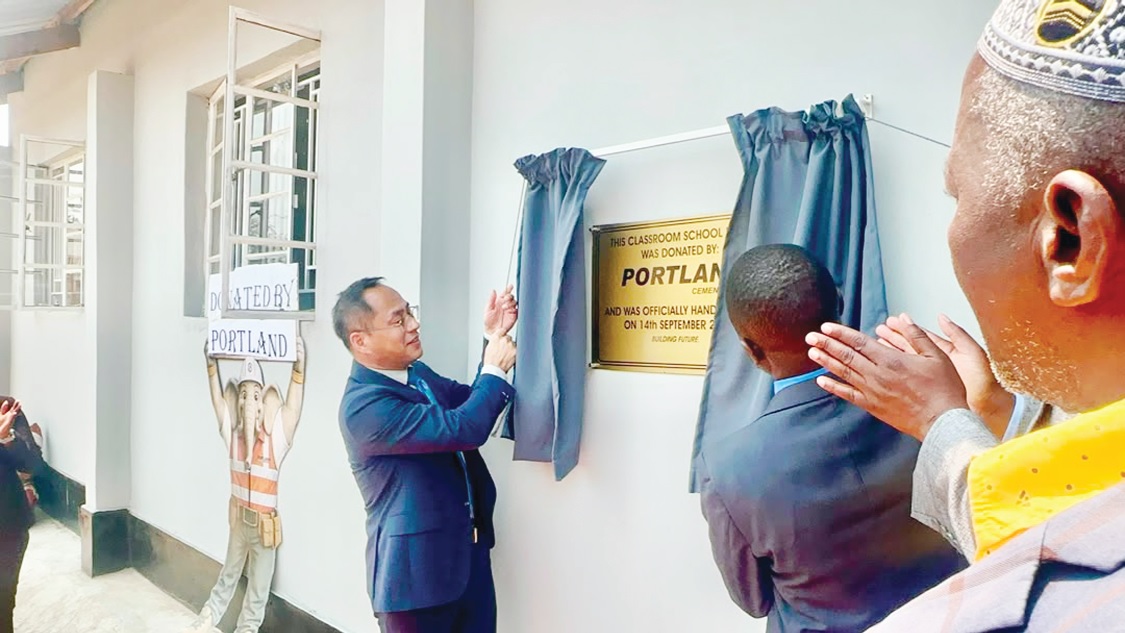
Local cement producer Portland Cement, which boosts of a gigantic clinker plant in Ng’onga area in Balaka, has handed over a newly constructed classroom block at Ng’onga Primary School.
The Company invested about K250 million in the construction of the block as part of its corporate social responsibility programme. Portland embarked on the project to address the problem of congestion in classrooms at the school that has about 1,000 leaners by providing additional learning space.
In order to provide a conducive environment for the learners, the company has furnished the new block with 100 two-seater desks. Portland Cement has also provided school bags and writing materials for all learners, as well as 60 bags of cement and 60 iron sheets to support improvements to the old school blocks.
Balaka District Council Chairperson Councillor Hastings Maluwa, who received the donation on bahlf of the Council, thanked Portland Cement and encouraged other private sector players to emulate the gesture.
Member of Parliament for Balaka Rivirivi Constituency, Honourable Chifundo Makande, advised the local community to take care of the donation.
Portland CEO Jianguo Liu, said the company will continue supporting the local community in a number of areas including education which is key to achieving sustainable development.
Head of Administration and Public Affairs for Portland Cement, Violet Vilili, said Portland constructed the school block following requests from local leaders and the District Council.
“Through initiatives like this we are helping in building the future, as we are helping create better opportunities for children to learn, grow and realise their potential,” said Vilili.
ASX-listed Globe Metals & Mining has commenced early mining activities at its Kanyika Niobium Project in Mzimba, marking an important step in the Project's development.
Mining Programme and Ore Stockpiling
Interim CEO and CFO Charles Altshuler explains that the the mining programme involves the progressive development of a series of strategically located pits across the main Kanyika orebody, with three key objectives including:
• Improve Mineral Resource Confidence:
Extract mineralised material from different locations across the orebody for bulk sampling and grade verification, providing additional data to validate and improve confidence in the existing Mineral Resource estimates.
• Establish Ore Stockpiles for Commissioning:
Progressively build stockpiles of niobium-bearing material to provide feedstock for future processing plant commissioning and testing.
• Support Infrastructure Development:
Extract and utilise suitable non-ore bearing material for the construction of processing plant terraces, foundations, roads and other supporting mine infrastructure.
Altshuler comments: "It is particularly pleasing to see mining activities physically underway at Kanyika after years of planning, technical studies and development work. This is an important milestone and a tangible demonstration of our commitment to bringing the Project into production.”
“There is still considerable work ahead, but we are now building on the groundwork completed in recent months and maintaining a clear pathway towards first production in 2028.”
“We believe Kanyika has the potential to become an important alternative source of niobium and tantalum for global markets, and we remain committed to unlocking that potential for our shareholders and stakeholders in Malawi."
Mining is being undertaken progressively in successive batches of approximately 5,000 tonnes of excavated material per batch. Each mining area is planned to extend approximately 50 metres in length and 16 metres in width, to a depth of approximately 2.5 metres, with access provided by a 40-metre ramp.
The mining areas are being selected based on geological drilling data, near-surface mineralisation and the existing Mineral Resource model. Ore-bearing material is excavated, hauled approximately 600 metres to the designated stockpile area and progressively accumulated for future processing plant commissioning and operational requirements. Suitable non-ore-bearing material is managed separately and utilised for mine infrastructure development.
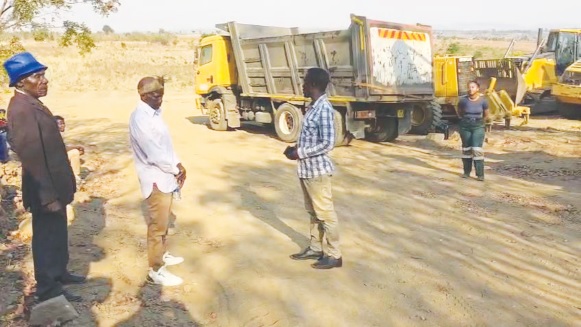
Mining activities are being undertaken by local contractor OG Plant Hire under the supervision of Globe's on-site technical team.
Mineralisation and Ore Characteristics
Based on the existing geological drilling data and Mineral Resource model announced to the ASX on 11 July 2018, the material within the planned mining area is estimated to contain average grades of approximately 0.45% Nb₂O₅ and 0.015% Ta₂O₅, subject to verification through sampling and assessment of the excavated material.
Initial observations indicate that the excavated material is predominantly fine-grained and unconsolidated, with no significant hard rock encountered during the early stages of excavation. These conditions are encouraging for the mechanical mining approach being employed, although further excavation and assessment will be undertaken as mining progresses.
The programme will also provide valuable information on mineralisation, grade distribution, excavation conditions and material handling characteristics to support subsequent mining activities and future processing operations.
Community Engagement and Traditional Authority Support
The commencement of mining activities was marked by a traditional ceremony attended by the three local area chiefs, who formally expressed their support and approval for mining activities to commence at Kanyika. The ceremony reflects the Company's ongoing engagement with traditional authorities and local communities as the Project progresses into active mine development.
Progressing Project Development
The commencement of mining follows the completion of several important preparatory activities, including the Phase 1 compensation programme, upgrades to the access roads, site clearing and preparation of the mining and stockpiling areas, and improvements to the on-site accommodation and supporting facilities.
Together, these activities have established the site access and operational infrastructure necessary to commence physical mining operations, representing a progression from preparatory works to active mine development.
The Company remains focused on progressing Kanyika towards first production in early 2028.
Players in the mining sector say the persistent fuel scarcity in the country is disrupting mining operations, delaying exploration activities and increasing project development costs, a situation which is impacting the sector’s contribution to the economy.
MD for Akatswiri Mineral Resources Josephine Muruwesi said the fuel shortage is negatively affecting the company’s operations, forcing it to delay or cancel planned activities as it struggles to secure fuel.
“The fuel scarcity is having a serious negative impact on operations. Many of our planned activities are being delayed while we search for fuel, and some have had to be cancelled altogether,” she said.
Muruwesi observed that the disruptions are also impacting on productivity of the wider mineral sector.
MD of Chiwandama Geo-Consultants John Nkhoma echoed Muruwesi’s concerns saying the fuel shortage is interfering with planned operations and making it difficult for companies to maintain their work schedules.
Vice-Treasurer of Blantyre Mining Association Noel Kamayenda said the crisis is hitting the mineral sector at a critical time when mining is increasingly being viewed as a potential source of foreign exchange earnings for Malawi.
Kamayenda said exploration and small-scale mining operations are among the activities most affected because essential equipment, including drilling rigs, excavators and compressors, rely heavily on diesel.
Kamayenda said the rising cost of securing fuel has also increased the expense of transporting drilling equipment to mining sites, with some operations being suspended because miners can no longer afford the additional costs from black market fuel.
He also called for greater transparency regarding fuel stocks, access to foreign exchange for fuel imports and planning along regional transport corridors.
Kamayenda said productive sectors such as mining and agriculture should receive appropriate consideration in fuel allocation because disruptions to their operations could affect economic activity and future export earnings.
President of the Gemstone Association of Malawi (GAM), Evangelist Philemon Lloyd Galawanda, said the fuel crisis is heavily impacting Artisanal and Small-scale Mining (ASM), gemstone mining and trading, as well as the transportation of minerals.
Galawanda said fuel is a critical input in the mining value chain, with shortages and rising prices increasing operational costs and reducing profitability, particularly for ASMs who operate with limited financial resources.
He said many mining operations depend on fuel-powered machinery, generators, pumps and transportation, implying difficulties in accessing fuel make it more expensive for miners to sustain their activities.
Galawanda said the crisis is also disrupting the movement of miners to their sites, the transportation of mining equipment and supplies, and the delivery of minerals to markets.
He said these challenges can delay production, disrupt mineral trading and increase the cost of doing business, while some mining operations may be forced to slow down or temporarily suspend activities when fuel is unavailable.
Civil Society Organisations (CSOs) working in Malawi’s mineral sector have urged government and its cooperating partners to set up gold refining facilities across the country following continued discovery of gold resources in various areas by small scale miners.
In an interview with Mining and Trade Review, the Natural Resources Justice Network (NRJN), an umbrella body for the CSOs, said selling gold which has been assessed and processed into bars is more profitable than dealing in raw gold.
Coordinator for NRJN Kennedy Rashid said it is very significant for Malawi to develop gold refining capacity because it offers an opportunity to move beyond extracting and trading raw gold towards retaining more economic value within the country.
Rashid said: “Refining can create employment, develop technical skills, strengthen mineral traceability, improve quality assurance and generate additional business opportunities.”
“However, its economic significance will depend on the availability of sufficient gold supplies, commercially viable operations and effective regulation.”
Gold assessment determines the gold content and purity, while melting and casting convert gold into a particular form.
Rashid said that a facility that assesses and molds gold into bars should not be classified as a full refinery, explaining that Malawi needs to assess its existing gold-processing infrastructure and determine the technical capacity required to develop a competitive domestic refining industry.
He said: “Licensing qualified local companies could be beneficial in several ways. It could retain more value within Malawi, create skilled and technical jobs, stimulate investment in mineral processing and related services, and improve the formalisation of artisanal and small-scale gold mining.”
“Licensed facilities could also provide transparent weighing, reliable assaying and documented transactions, helping miners obtain fairer prices.”
“Furthermore, formal gold transactions could improve the gover“However, licensing alone will not guarantee these benefits. The government must ensure that prospective operators have the technical capacity, sufficient supply, financial viability and appropriate environmental and financial compliance systems.”ment's ability to monitor exports, collect applicable taxes and royalties, and track foreign-exchange earnings.”
“However, licensing alone will not guarantee these benefits. The government must ensure that prospective operators have the technical capacity, sufficient supply, financial viability and appropriate environmental and financial compliance systems.”
Rashid said gold refineries contribute to both revenue generation and foreign exchange earnings particularly if they bring currently informal transactions into the formal economy and support legitimate exports of refined gold.
He said Government revenue could increase through applicable taxes, licensing fees and improved compliance with existing fiscal obligations.
Rashid said: “NRJN supports responsible domestic mineral value addition as an opportunity to strengthen economic diversification, transparency and public benefit from Malawi's mineral resources.”
“We believe the government should create an enabling environment for qualified local investors to establish commercially viable gold refineries, provided that licensing is accompanied by strong accountability, environmental protection and responsible sourcing requirements.”
“Our position is that Malawi should not measure success simply by the number of refinery licences issued but rather by the value retained within the country, jobs created, public revenue collected, improvements in miners' livelihoods and the effectiveness of safeguards against illicit trade and environmental harm.”
“Ultimately, gold refining should form part of a broader strategy to ensure that Malawi's mineral wealth contributes meaningfully to sustainable development and the welfare of its citizens.”
Concurring with Rashid, Seasoned Geologost Ignatius Kamwanje said local refineries can assist in reshaping the country’s socioeconomic status.
Kamwanje said: “Local gold refineries enhance value addition, job creations, and increase national revenue through foreign exchange earnings and taxes.
“The country attains trust in global trade and investment confidence, creates a circular economy by recycling e-waste from industrial, electronic wastes containing gold, combating illegal sale and smuggling of gold outside through Environmental Safeguarding principles.”
Meanwhile, Aureum Gold Trading operating under Inosellia Group is the only gold assessment facility.
In a separate interview, Inosselia Country Director Michael Gorelik explained that at the facility the offered services include melting metals and alloying, analyzing the composition of the alloys and their gold content, and establishing the accurate purity level/carat of the gold to then melt and mold into bars.
Gorelik said: “It is not a refinery since there is no value addition and the original purity is not enhanced.”
“The facility does not offer assessment services to other parties, only if its towards a buying transaction,”
Gorelik said currently there is very low turn up of clients seeking the services.
Efforts to reduce mercury use in Malawi’s artisanal and small-scale gold mining (ASM) face a major obstacle as miners continue to rely on the substance to maximize gold recovery amid limited access to affordable alternative technologies.
Mercury has become a common feature of gold processing, particularly in operations involving reef gold, with growing mining activities and the increasing number of hammer mills contributing to demand for the substance.
Interim Chairperson of the Gold Mining Association Chikomeni Manda says mercury use has increased significantly over the years, partly because it is cheap, readily available and effective in separating gold from crushed ore.
“At present, gold mining and mercury use are inseparable, especially for operations that mine reef gold,” says Manda.
The economic incentive to continue using mercury presents a challenge for efforts that rely primarily on civic education to change miners’ behavior. While awareness campaigns can communicate the dangers, miners operating on limited income must also consider how alternative processing methods will affect their earnings.
Federation of Artisanal and Small Scale Miners (FASMIM) spokesperson Philip Kamoto says mercury costs between k5,000 and k8,000 per gram on the local market. He explains that the substance captures even tiny gold particles, potentially delivering higher returns than basic mercury free gold panning under current conditions.
“Fundamentally it is an environmental problem, but practically it has a big bearing on poverty and technological problems,” says Kamoto.
Kamoto, therefore, says ASMs would struggle to abandon a technique that generates immediate income without a viable replacement.
“Without giving the miners an affordable alternative to mercury that produces similar results, the campaign against the substance will backfire because people fear poverty more than death itself,” he says.
Beyond economic challenges, weak regulation is also complicating efforts to control mercury use. Manda says the largely informal nature of the sector makes monitoring and inspection difficult, adding that the Mining and Minerals Regulatory Authority (MMRA) and the Malawi Environmental Protection Authority (MEPA) need to strengthen their interventions alongside other stakeholders.
Kamoto says more miners can embrace alternatives once they see that the methods are effective and economically viable.
Miners mix liquid mercury with crushed ore to bind gold into an amalgam, then burn off the mercury to leave behind the pure gold.
But governments and cooperating partners all over the world discourage the use of mercury due to health hazards associated with exposure to the substance.
Local Artisanal and Smallscale Miners (ASMs) has welcomed the gold trading centre that the Malawi Mining Investment Corporation (MAMICO) has established in Lilongwe.
Interim Chairperson of the Gold Mining Association Chikomeni Manda said the establishment of more Gold Trading Centers is expected to benefit artisanal and small-scale miners by bringing formal gold markets closer to their mining sites, reducing transport costs and giving them better access to competitive prices.
“The arrangement will benefit miners as they will no longer have to travel long distances to sell their gold, while competitive prices could gradually eliminate some middlemen,” he said.
The Malawi Mining Investment Company (MAMICO) is preparing to begin purchasing gold from artisanal and small-scale miners through its Gold Trading Centers (GTCs), in a move expected to help curb smuggling and increase the country’s foreign exchange earnings.
During a visit to MAMICO’s Gold Trading Centre in Nathanje, Minister of Mining Hon. Thoko Tembo praised the company for investing in the necessary equipment and infrastructure to support the initiative. He expressed hope that gold purchasing would begin soon, noting that the initiative could contribute towards easing the country’s foreign exchange challenges.
Tembo said government is engaging financial institutions, private sector players and other stakeholders to develop an effective gold buying system that offers competitive prices and encourages miners to trade through formal markets. He also stressed the need to equip miners with improved machinery and promote environmentally friendly mining methods to ensure responsible extraction of the resource.
CEO for MAMICO Professor Dr Leonard Kalindekafe said the company has completed preparations to begin buying gold at three initial trading centres, with the required equipment and staff already in place. However, the launch of the purchasing exercise awaits documentation from the Reserve Bank of Malawi authorizing the purchase of gold.
“NBS Bank and FDH Bank are ready to provide initial funding for the initiative as MAMICO finalizes arrangements to facilitate formal gold trading,” he said.
Kalindekafe said a recent survey by the company mapped more than 100 gold mining sites in 26 districts across the country, except Likoma and Mchinji, highlighting the extent of gold mining activities and the opportunity for Malawi to benefit from the resource.
He said properly harnessing the resource could contribute more than 5% of the country’s Gross Domestic Product (GDP) annually and strengthen foreign exchange reserves.
Beyond establishing the trading centers, MAMICO is conducting feasibility studies and piloting mining and processing initiatives aimed at improving the management and economic returns of the country’s gold resources.
Stakeholders in Malawi’s minerals sector say the push to process minerals locally will only succeed if government addresses critical gaps in electricity, skills, investment incentives and the regulatory framework.
The concerns emerge as the Ministry of Mining consults industry players on proposed amendments to the Mines and Minerals Act, 2023, and draft Mines and Minerals Value Addition Regulations.
The Central Region meeting, held as part of a nationwide consultation process, brought together government institutions, mining companies, academia, industry associations and other stakeholders to scrutinize the proposed reforms and identify areas that could affect the growth of the sector.
While stakeholders generally welcomed the move to strengthen the legal framework and promote local processing, they said the reforms must go beyond changing legislation and create an environment where investors can establish and operate mineral processing facilities.
Secretary for Mining Rodwell Mzonde said the consultations are providing the Ministry of Mining with ideas on how the proposed legal and regulatory reforms can better support the growth of Malawi’s mining industry.
“We started consulting on September 29 in the South, then on October 1 in the North. We have collected a lot of views in the consultations which is assisting us to frame the Act in a way that will help in the growth of the mining sector,” Mzonde said.
President of the Malawi Women in Mining Association Ashley Simbeye said the reforms should also address the participation of women, wrning that skills and capacity gaps could prevent women from pursuing value addition opportunities.
“There are capacity and skills gaps, particularly among women in mining, and government needs to establish a supportive framework for value addition chain to ensure that women are not left behind”, Simbeye said.
President of the Chamber of Mines and Energy Maxwell Kazako said the review of the mining law is necessary because some gaps in the existing legislation create uncertainty and challenges in implementing mining projects.
He said the proposed changes therefore need to clearly define the expectations of government and investors particularly on issues that directly affecting mining operations.
“There is need for greater clarity in the proposed reforms to ensure that government and investors are on the same page.
Kazako said the proposed reduction in the allowable percentage of expatriate workers also requires careful consideration, arguing that Malawi’s mining industry is still developing and may not have sufficient local expertise for some specialized positions.
The discussion comes at a time when government is seeking to extract greater economic benefits from Malawi’s mineral resources through local processing, employment, skills development and increased participation of local businesses.
For the reforms to deliver that ambition, stakeholders say the country must ensure that the new rules are matched with the practical conditions needed to make mining and mineral processing viable. Otherwise, stronger legislation alone may not be enough to turn Malawi’s mineral wealth into lasting economic value.


The establishment of a stable and self-sustaining ecosystem, but not necessarily the one that existed before mining began. In many cases, complete restoration may be impossible, but successful remediation, reclamation, and rehabilitation can result in the timely establishment of a functional ecosystem.
The cleanup of the contaminated area to safe levels by removing or isolating contaminants. At mine sites, remediation often consists of isolating contaminated material in pre-existing tailings storage facilities, capping tailings and waste rock stockpiles with clean topsoil, and collecting and treating any contaminated mine water if necessary.