Friday, October 02, 2026 Facebook | Twitter | Linkedin
Magazine

Mining & Trade News

Malawi Online News
...
Mining

TECHNICAL FILE
September 27, 2026 / By: Rajab Dulaja Economic Geologist - Mineral Exploration and Mining. Graduated from Faculty of Minerals and Petroleum, International University of Africa - IUA, Sudan
...
Mining

ASM Federation hails RBM for increase in gold purchases
September 27, 2026 / Chisomo Phiri
...
Mining

DRAFT MINING LAW HAUNTS KANGANKUNDE
September 27, 2026 / Admin
Mining
TECHNICAL FILE
September 27, 2026 / By: Rajab Dulaja Economic Geologist - Mineral Exploration and Mining. Graduated from Faculty of Minerals and Petroleum, International University of Africa - IUA, Sudan

BULK SAMPLING IN MINERAL EXPLORATION

Why 10,000 Tonnes and Not Just a Few Kilograms?

An Article for the ward counselors,Chiefs and Communities

By:  Rajab Dulaja.

Economic Geologist - Mineral Exploration and Mining.

Graduated from Faculty of Minerals and Petroleum, International University of Africa - IUA, Sudan 

August 2026 | Lilongwe,

INTRODUCTION

In mining districts across Malawi, including Mangochi, one of the most common questions asked by ward counselors chiefs and communities.

Why does the company need to dig and take 10,000 tonnes of soil and rock? Can’t they just take 2 kilograms to test?

The answer lies in geology, engineering, and finance. While a few kilograms can tell us if mineral is present, 10,000 tonnes tells us if a mine can be built, if it will be profitable, and if it will benefit the community for 20 years. 

This article explains bulk sampling with real Malawi examples and a simple household example, and why it is a critical step before any large mine is approved under the Mines and Minerals Act 2023.

1. WHAT IS BULK SAMPLING?

Bulk Sampling is the extraction, transportation, and processing of a large quantity of ore — typically between 1,000 and 10,000 tonnes— for testing purposes. 

It is different from:

Grab Sampling: 1kg to 50kg picked by hand. Used in early exploration.

Drill Sampling: 10kg per meter from a drill rig. Used to estimate resources.

Bulk sampling is the bridge between _"we found minerals"_ and _"we can build a mine."_

Legal Requirement: Under the Mines Minerals Act 2023- any activity involving more than 1,000 tonnes for testing requires a Bulk Sampling Permit from the Minister. It is legally considered mining.

2. WHY NOT JUST A FEW KILOGRAMS? THE 5 CORE REASONS

1. Variability - "The Nugget Effect"Minerals are not evenly spread. 

Example: Gold in Namizimu Forest Reserve, Mangochi

5 samples of 2kg may show 24g/t average, but a 10,000t bulk sample reveals the true grade is 2g/t. 

Lesson: A few kilograms can lie. Ten thousand tonnes tells the truth.

2. Metallurgical Testing - "You Can’t Test a Factory with a Cup"

Example: Heavy Mineral Sands at Makanjira, Mangochi - MAWEI Mining

A 2kg test confirms titanium exists. But to know if machines clog, water usage, and recovery rate, the company must run 1,500 to 5,000 tonnes through a pilot plant for 30 days to design a $300 million plant correctly.

3. Bankable Data for Investors

No bank will lend $200 million based on 5kg. 

Example: Rare Earths at Songwe Hill, Phalombe - Mkango Resources

Bulk sampling 3,000 tonnes revealed recovery was 62% not 85%. This saved $150 million in plant redesign.

4. Real Mining Conditions & Dilution

Example: Limestone at Njeleza, Cement Products Ltd, Mangochi. 

Lab samples: 52% CaO. Bulk sample of 5,000t: 44% CaO due to waste rock mixed during blasting.

 5. Market Testing

Example: Zircon from Makanjira

Buyers in China require 25-75 tonnes to test before signing a contract for 1 million tonnes per year.

 HOUSEHOLD EXAMPLE: THE MAIZE FLOUR ANALOGY

To help chiefs and communities understand

Imagine,a 100g container of mixed powder: 

5g of Maize flour, 36g Salt, 59g Soil.

 You need to cook nsima for 10 people. You need 2.5kg of pure maize flour.

Question:

How much of the whole mixture must you process to get 2,500g of maize flour?

Calculation: 

2,500g ÷5g ×100g = 50,000g

= 50 tonnes of mixture

The Lesson: Just as you must process 50 tonnes of mixture to get 2.5kg of flour, a mining company must process 10,000 tonnes of rock to know the true grade. 

That’s BULK sampling. You test the bulk to know the truth.

3- ROLE OF THE DISTRICT MINING OFFICER

Because bulk sampling is large-scale, the DMO has 6 responsibilities:

1.  Verify the Permit: Confirm Bulk Sampling Permit from the Minister

2.  Monitor Tonnage: Use weighbridge to ensure only approved tonnage is moved

3.  Collect Revenue: Ensure royalty is paid. Heavy minerals = 10% of gross value

4.  Environmental Compliance: Check dust, pit safety, rehabilitation. Critical for Lake Malawi

5.  Community Engagement: Ensure CDA 2021 is signed. Communities benefit during sampling

6.  Reporting: Submit final reports to MMRA on tonnage, grade, and destination

Note: 1-The company needs 10,000 tonnes to test if the the ore can be mined and processed profitably for not less than 15 years.

2- Poor monitoring of bulk sampling contributes to Malawi losing an estimated MK20 million per day to illegal mining.

TABLE 1:MAIZE FLOUR ANALOGY-HOUSEHOLD-

Sample type

Sample quantity

Maize Analogy for 10 people

What does it tell us

Grab sample

2kg

Testing 1 spoon of mixture

Is maize flour present?

Drill Sample

1 tonne

Checking 1 Cup from the mixture

How much of maize flour in this cup?

Bulk sample

10,000 tonnes

Processing 50 tonnes of mixture to get 2.5kg of maize flour.

Can we cook for 10 people for 20 years.

Lesson: Few kilograms tells if the maize flour exists in the mixture. 50 tonnes tells us if we can feed 10 people.

TABLE 2:THE RARE EARTHS ORE ANALOGY-GEOLOGY-

Mining term

Sample Type

Quantity

Songwe Hill example:Rare Earths ore

What does it tell us?

Mineral occurrences

Grab sample

2 kg

Picked rock with visible mineral

Are rare earths present? Yes/No.

Resource Estimate

Drill Sample

1 tonne

5 kg from each meter of drilling

Grade at 1.5%of Total rare earths oxides(TREO)

Reserve and feasibility

Bulk sample

10,000

Pit excavation +pilot plant test

Can we profitably separate 1-3 % Rare Earths from 97-99 Gangue? What's waste, cost, and recovery?

Lesson: Few kilograms are for testing mineral presence. Thousand tonnes are for decisions.

By Law: Any company extracting and exporting more than 1,000 tonnes must have a Bulk Sampling Permit from MMRA/ Minister of Mining. [Mines and Minerals Act 2023].

 WHY SO MUCH SAMPLE? THE MAIZE FLOUR EXAMPLE

To cook nsima for 10 people, you need 2.5kg of pure maize flour.

But what if your maize flour mixed with soil and other things?

If 100g of mixture only has 5g of maize flour....

To get 2.5kg of maize, you must process 50 TONNES of mixture.

Mining is the same. To find 2.5kg of economic mineral, they must test atleast 10,000 tonnes of rock. The rest are regarded as wastes (Gangue minerals).

4- KEY BENEFITS OF BULK SAMPLING

1.  Jobs: 30-100 people employed during sampling

2.  Revenue: Government collects royalty even during testing

3.  Truth: Proves if the mine will really bring schools, clinics, and roads

5-WHY ARE SAMPLES TAKEN OUTSIDE MALAWI FOR TESTING?

What Are We Lacking?

This is another most common question from communities: _"Why is our soil going to South Africa, Australia or China?"_

The answer is the same reason we refer patients from Mangochi District Hospital to South Africa or India.

Health Example:

A patient needing brain surgery or cancer treatment is referred abroad. 

Why?Lack of specialized doctors, lack of MRI and radiotherapy machines, lack of specialized labs. 

The goal is to save the patient's life with the best and most trusted treatment.

Mining Example: 

We send 50kg of rock to Johannesburg, China or Australia...

The 4 Main Reasons:

 1-Lack of Specialized Laboratories.

Testing rare earths, zircon, and heavy minerals requires machines costing $2M - $10M. Examples: ICP-MS, Pilot flotation plants, Radioactivity testing. 

Malawi currently has basic labs at MMRA and universities, but not pilot-scale plants._

2-Bankable Certification

Banks and buyers in London, Toronto, and Shanghai only trust results from labs certified by ISO 17025. Most of these labs are in South Africa, Australia, Canada. 

 Without this certificate, no one will invest $200 million.

3-Metallurgical Testing at Scale

To test 5,000 tonnes you need a pilot plant. Malawi does not yet have commercial pilot plants for rare earths or heavy minerals.

4-Speed and Cost

 Sending 50kg by air to Johannesburg and getting results in 3 weeks is faster and cheaper than building a new lab that will take long time. However, while sending samples outside Malawi, government has to source funds to build local laboratory in the near future.

5-To Protect Malawi’s Interest: Bad metallurgical data leads to a failed mine. A failed mine means no royalties, no jobs, and an abandoned pit. Bulk testing abroad protects us from that risk

What Should We Do? - 3 Recommendations

1. Short Term: Negotiate with companies that a % of samples must be tested at MMRA labs in Lilongwe for verification.

2.  Medium Term: Build a Regional Pilot Plant Hub.

3.  Long Term: Through the Mines and Minerals Act 2023,require companies to do "progressive in-country testing" as part of their Bulk Sampling Permit conditions.

Note: The DMO must record where samples are sent, by whom, and ensure MMRA gets duplicate results.

6-  ROLE OF THE DISTRICT MINING OFFICER

Track Sample Export: Keep a register of all samples exported. Ensure MMRA export permits

CONCLUSION:

Bulk sampling is a critical bridge between exploration and full-scale mining. It allows a license holder to extract and process a large volume of ore to confirm grade, metallurgy, and economic viability before committing millions of dollars to develop a mine.

However, under the Mines and Minerals Act 2023,bulk sampling is no longer an informal "test" activity. It must be done transparently, with an approved Work Program, ESIA clearance, notification to the District Council, and full reporting to MMRA. Where ore is sold during bulk sampling, royalty at 3-15% is payable, closing the loophole that contributed to revenue losses highlighted in the 2024 Auditor General’s report.

From a regulatory perspective, bulk sampling presents both an opportunity and a risk. The opportunity is that it reduces investment risk and attracts serious investors, which aligns with MMRA’s mandate to promote responsible mining. The risk is that it can be abused for illegal mining and mineral smuggling if not monitored. This is why the 2023 Act imposes strict penalties of up to K5,000,000 fine or 3 years imprisonment for unauthorized bulk sampling.

The role of District Mining Officer, is to ensure that all bulk sampling in the district is compliant: by  verifying the work program, confirm EPA approval, ensure community engagement through CDAs, and that all production data and royalties are reported. This protects government revenue, the environment, and community interests.

In summary, bulk sampling must be treated as part of the mining cycle, not separate from it. When properly regulated, it supports value addition, job creation, and increased government revenue— which are the core objectives of the Mines and Minerals Act 2023.


 

Mining
ASM Federation hails RBM for increase in gold purchases
September 27, 2026 / Chisomo Phiri

The Federation of Artisanal and Small- Scale Mining in Malawi (FASMIM) has commended the Reserve Bank of Malawi (RBM) for the significant increase in formal gold purchases from artisanal and small- scale miners, saying competitive prices are encouraging more miners to use official channels.The Federation of Artisanal and Small- Scale Mining in Malawi (FASMIM) has commended the Reserve Bank of Malawi (RBM) for the significant increase in formal gold purchases from artisanal and small- scale miners, saying competitive prices are encouraging more miners to use official channels.

FASMIM President Percy Maleta said in an interview with Mining & Trade Review that the amount of gold being formally pur- chased by the Export Development Fund (EDF), a subsidiary of RBM, has risen to an average of about 60 kg per week.

Maleta attributed the increase largely to the competitive price being offered to local gold producers, saying the development is helping to make the formal market more at- tractive to Artisanal and Small-scale miners (ASMs).

“This is not by mistake or fluke. It is price, good price,” said Maleta

He urged the RBM to maintain, and where possible increase the price to con- tinue making it increasingly difficult for gold smugglers to compete with the formal market.

He said a competitive formal gold market will encourage miners to sell through offi- cial channels while ensuring that Malawi derives greater economic benefits from its mineral resources

Maleta also commended the Mining and Minerals Regulatory Authority (MMRA) for its sensitisation and public awareness activities aimed at educating citizens about its mandate, responsibilities and the impor- tance of compliance in the mining sector.

He said better-informed miners will con- tribute to stronger and more transparent mineral markets, ultimately benefiting the wider economy.

Echoing Maleta’s sentiments, mining ex- pert Ignatius Kamwanje said the price being offered by EDF is currently favourable compared with prices in neigh- bouring countries, providing an important incentive for miners to participate in the for- mal market.

He said :"Generally, the gold price in Malawi by EDF is on a higher note and a good one compared to our neighbours. This is an encouragement to miners, especially ASMs, given that the average buying amount per week is also encouraging."

Kamwanje however,said the government should move faster to formalise the ASMs and establish a fully functional formal gold market to further address smuggling.

The RBM launched a domestic gold-buy- ing initiative in 2021 to purchase gold di- rectly from ASMs with the broader objective of creating a formal market while building the country’s gold reserves.

Mining
DRAFT MINING LAW HAUNTS KANGANKUNDE
September 27, 2026 / Admin

Parliament is in the next sitting ex- pected to deliberate and pass a bill for a new law, the Mines and Min- erals Act 2026, which is likely to be a stumbling block to plans by ASX-listed Lindian Resources to kickstart commercial exportation of monazite concentrate from Kanagnkunde mine in Balaka.

The Kangankunde Rare Earth Deposit is a globally significant deposit that is one of the biggest in the world with rare earths now in high global demand as they are used in modern high-tech applications in- cluding electric vehicles, wind turbines and military ware with superpowers such as the USA, EU and People’s Republic of China involved in a geopolitical war over the resources.

A draft of the bill that Government is using for stakeholder consultations indi- cate that the new law will contain thresh- olds up to which all minerals must be processed before export, which is in line with State President His Excellency Arthur Peter Mutharika’s ban on raw mineral ex- ports declared last year through an Execu- tive Order.

The draft requires rare earth mines in Malawi to process ore to rare earth oxides, which is the final stage before exportation. Lindian is, however, producing monazite concentrate, which is an immediate stage in the processing cycle with its Executive Chairman Robert Martin arguing that this is the final stage possible in Malawi due to lack of adequate electricity and water in addition to environmental complications associated with dangerous chemicals used in rare earth processing.

“Government has decided to incorporate elements of the Presidential raw mineral export ban into the new law so that we do not confuse these issues,” said the source who opted for anonymity.

He said the new Act has also substan- tially reduced the thresholds for classify- ing mines as large scale, which will see Kangankunde and many mechanized mines including cement and quarries auto- matically transitioning to large scale.

“Lindian will this time fail to escape the trap. They used the court to get the licence after government refused to renew it, and the same law will apply for them to transi- tion to large scale mining,” said the source

He sounded upbeat that the Mines and Minerals Act 2026 to replace the 2023 Act, currently in force, “will clean up all the rot in the sector.”

Lindian is currently using a medium scale mining licence belonging to Rift Val- ley Resources Development acquired through a US$30-million shareholding deal.

There have been calls from a cross-sec- tion of Malawians led by Speaker of the National Assembly Honourable Sameer Suleman urging Lindian to upgrade the li- cence to large scale understanding the huge size and value of the deposit.

The calls have reportedly led to Lindian applying for a large scale mining licence following an order from the Attorney Gen- eral.

As opposed to medium scale, a holder of a large-scale mining licence signs a Min- ing Development Agreement with govern- ment that allows Government to negotiate dues for the host country including state equity.

The large scale mining licence holder is also mandated to sign a community devel- opment agreement with the privileged communities in the mining area.

Meanwhile, Government is pursuing en- forcement measures against Rift Valley al- legedly for allowing Lindian to use its medium scale licence without following government procedures that involve noti- fying the Mining and Minerals Regulatory Authority over transfer of rights.

“Government has started the cancella- tion process for the licence but it is not au- tomatic that the licence will be cancelled. There are notices involved, and the Law provides for a 30-day notice period then the licence holder has to justify why the li- cence must not be cancelled,” says the source.

Lindian’s founder and largest share- holder Asimwe Kabunga brandished a 2018 Malawi Supreme Court order on so- cial media warning Malawi Government not to tamper with Rift Valley’s Medium Scale Mining Licence which drew the wrath of a cross- section of Malawians.

Rift Valley acquired the Kangankunde licence following a protracted court wran- gle that saw the court ruling that Govern- ment awards the mining hopeful US$100-million after it cancelled the li- cence. Government just opted to renewthe licence for the Company.

Minister of Mining Thoko Tembo has,meanwhile, commended progress made in developing draft amendments to the Mines and Minerals Act of 2023, say- ing the proposed changes will strengthen governance and support sustainable development of the mining sector

The amendments include removing MMRA’s mandate to establish coopera- tives, strengthening the use of local sup- pliers and contractors, and training Malawians in specialized skills.

The draft also proposes reducing the ex- ploration license period from 11 to seven years, limiting applicants to three explo- ration licenses, and allowing increased use of machinery in artisanal and small-scale mining under strict conditions.

The proposals also include at least 40 percent beneficial ownership by Malawian citizens in medium-scale mines, while large-scale mines would be required to offer at least 20 percent of shares to Malawians at fair market value or list on the stock exchange.

Proposed regulations on mineral pro- cessing and value addition, include mini- mum beneficiation requirements for different mineral groups. For precious met- als, these include crushing, milling, sepa- ration, smelting, dewatering and refining.

There are also regulations on licensing, occupational safety and health, environ- mental management, community develop- ment and penalties.

The Ministry is developing the drafts through benchmarking with other coun- tries and stakeholder consultations.

Mining
KASIYA RARE EARTH STUDY POINTS TO ADDITIONAL EXPORT OPPORTUNITY FOR MALAWI
September 26, 2026 / Admin

Malawi's planned Kasiya Critical Minerals Project could potentially produce a third critical mineral product after a new study identified the opportunity to recover rare earth minerals from material already processed for rutile and graphite.

If ultimately developed, the additional products could increase the economic value generated by Kasiya, with the potential for additional fiscal revenue for the Malawi government, employment and participation by local businesses and service providers.

It could also broaden Malawi's role in international critical-mineral supply chains at a time when governments and manufacturers are looking to diversify sources of minerals used in electric vehicles, renewable-energy technologies and advanced manufacturing.

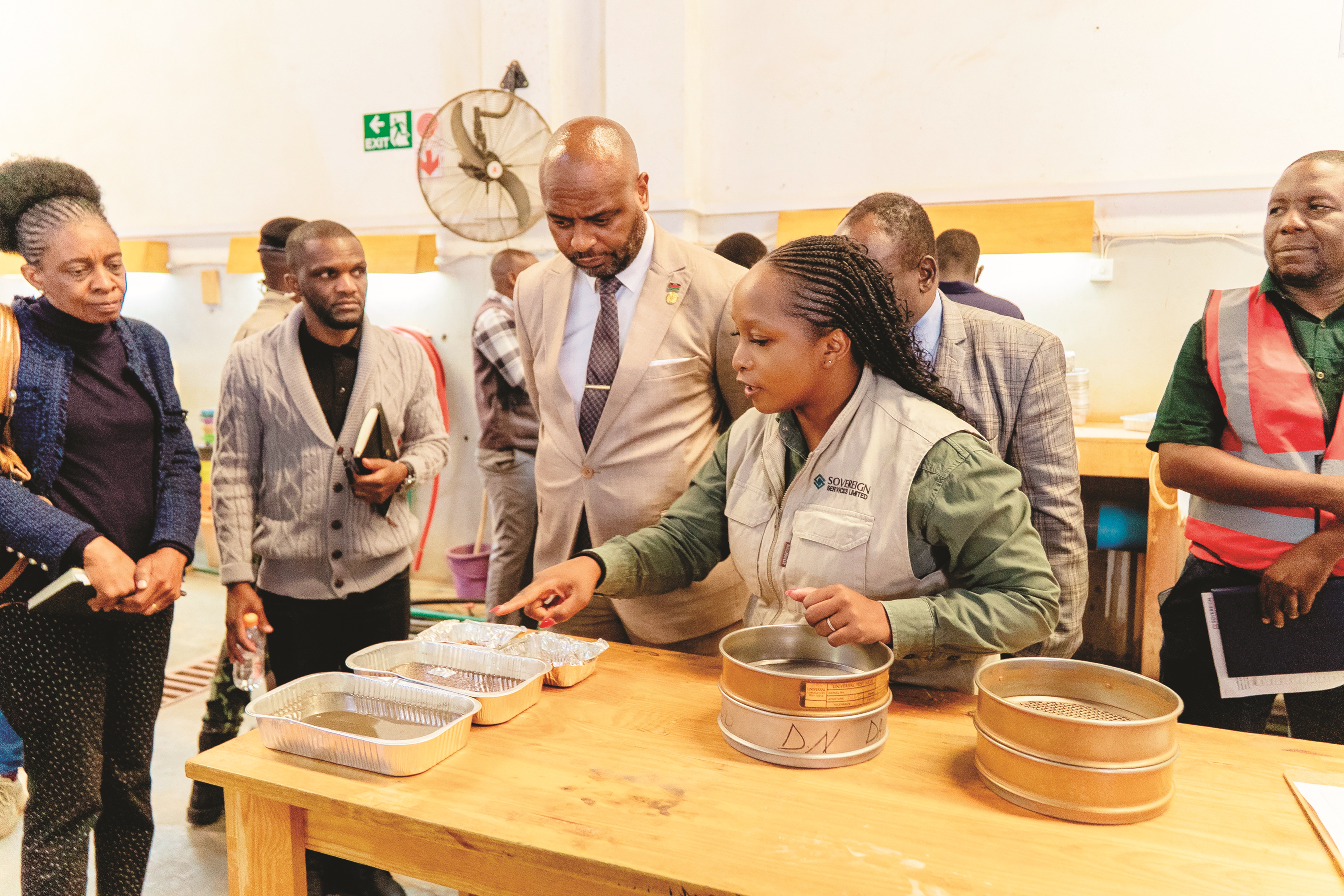
Sovereign Metals, operating as Sovereign Services in Malawi, has completed a Scoping Study examining the recovery of a monazite rare earth concentrate at Kasiya, potentially adding another export product without requiring additional mining or an increase in the amount of material extracted.

The proposed rare earth circuit would be integrated into the wider Kasiya operation to recover monazite from material left after rutile and graphite have been extracted. This leftover material is referred to as tailings.

At full production, the study estimates Kasiya could produce approximately 2,626 tonnes of rare earth concentrate a year, containing around 1,485 tonnes of total rare earth oxides.

The concentrate is expected to contain neodymium and praseodymium, which are widely used in high-performance permanent magnets, together with dysprosium, terbium, yttrium, samarium and gadolinium.

The April 2026 Definitive Feasibility Study for Kasiya envisages annual steady-state production of 222,000 tonnes of natural rutile and 275,000 tonnes of natural flake graphite. Rare earth concentrate would represent an additional product stream from the same operation.

The Scoping Study estimates that the rare earth operation could generate additional annual revenue of approximately US$104 million at steady-state production, based on forecast market prices and the expected composition of the concentrate.

It reports an incremental pre-tax net present value of US$722 million and a pre-tax internal rate of return of 151% for the proposed rare earth circuit.

However, the figures are early stage estimates rather than forecasts of actual revenue or profit and depend heavily on future rare earth prices.

Rare earth markets are concentrated and prices can be volatile. Under a more conservative scenario based on floor-price mechanisms previously agreed by the United States Government for selected rare earth oxides, the study reports an incremental pre-tax net present value of US$183 million and a pre-tax internal rate of return of 43%.

The study estimates additional capital expenditure of approximately US$29 million to achieve first rare earth production and total incremental capital expenditure of US$57 million across Kasiya's two planned development phases.

The findings remain subject to further technical studies, financing, regulatory approvals and the wider Kasiya rutile and graphite project proceeding to construction and operation.

The monazite occurs within the same shallow, weathered mineral system that contains Kasiya's rutile and graphite resources.

Sovereign has reported a maiden monazite Mineral Resource Estimate within the open pits already designed for the rutile and graphite project.

Kasiya's existing Definitive Feasibility Study covers a 25-year mining schedule.

The rare earth Scoping Study currently uses a 23-year mine life because the proportion of Inferred Mineral Resources during the final two years does not provide sufficient confidence for those years to be included in the economic assessment.

Further resource work is planned as Sovereign progresses the rare earth assessment.

The proposed recovery process would use gravity separation and flotation after the existing rutile separation stages.

Importantly, the study assumes no additional mining and no additional run-of-mine material would be required to produce the rare earth concentrate.

Sovereign has already completed test work demonstrating the recovery of a rare earth concentrate.

Further work will assess how recovery rates and concentrate quality vary across Kasiya's planned mining schedule.

The next phase is expected to include a feasibility study integrating rare earth recovery into Kasiya's wider development plan.

Sovereign also plans to produce representative samples for potential customers and undertake further work on product specifications, treatment terms, transportation and market requirements.

Sovereign cautioned that a Scoping Study is an early-stage technical and economic assessment.

Development of the rare earth product also depends on the wider Kasiya rutile and graphite project obtaining regulatory approvals, securing financing and proceeding through construction and commissioning.-Langmead & Baker


Mining
Globe secures legal clearance to advance Kanyika Project
September 26, 2026 / Jacqueline MONJEZA

ASX-listed Globe Metals and Mining says the long –running legal proceedings brought by members of the Kanyika community against the Company and the Malawi Government through the Attorney General have been formally withdrawn and discontinued by the claimants.

The Australian-listed mining company says 243 members of the Kanyika community withdrew and discontinued their legal proceedings with a notice of withdrawal and discontinuance filed in the High court of Malawi.

The case, known as Nthondo Banda and 242 other members of the Kanyika Community Vs Globe Metals and Mining Limited and the Attorney general, began in August 2017. The dispute relates to historical exploration activities and preparatory work associated with the proposed development of the Kanyika Project.

Interim CEO and CFO of Globe Metals and Mining Charles Altshuler explains: “The withdrawal and discontinuance of these proceedings is a very positive development for the Kanyika project. It brings a longstanding legal matter to an end and provides greater certainty for the project to continue progressing towards development.”

“Importantly, the withdrawal of the proceeding with the support of the affected community members demonstrates the shared desire of the local community to see the Kanyika project progress and the benefits of its development realized.”

“The resolution represents another important step forward for Kanyika. With this historical matter now resolved, the current focus is on completing the compensation and resettlement programme and enabling access to the land required for planned mining and development activities.”

We are very pleased to see this matter concluded with community support and Kanyika continuing to progress towards development and production.”

The withdrawn case was previously disclosed in Globe’s 2025 Annual Report as a contingent liability, with the claim estimated at between MWK700 Million and MWK800 Million.

Globe says the current compensation and resettlement programme is separate from the historical court case. The company is expected to pay compensation under the current programme during this month and says it will provide a separate update on the process.


Mining
Budgetary constraints impacting mine inspection errands
September 26, 2026 / Wahard Betha

The Ministry of Mining says budgetary constraints are impacting its drive to scale up mine inspections in the wake of growing activities in the sector.

Chief Inspector of Environment in the Ministry Mphatso Chikoti told journalists at a media training workshop in Salima that the Ministry faces challenges of understaffing amidst inadequate financial support.

He said even though Mining and Minerals Regulatory Authority (MMRA) recruited some officials, there are still not enough to match the overwhelming demand of staff in the wake of increased activity in the sector.

“We believe when we are fully devolved that will change.The issues of funding are still haunting us because for a team to travel to do inspection we need over MK10-million just for one trip which is much difficult with our allocation from the Treasury,” said Chikoti.

The Ministry is. meanwhile, in the process of introducing mining and geological officers in districts and town councils across the country, which Chikoti believes will enhance safe and sustainable mining as the officers will be operating right in the areas where the activities are taking place.

Civil Society Organisations (CSOs) hailed the initiative in a  joint statement describing it as a significant milestone in advancing accountable, participatory and responsive governance of Malawi's mining sector, by bringing decision-making closer to communities directly affected by mining activities.

Several CSOs and networks including NCA-DCA, Evangelical Association of Malawi (EAM), Malawi Economic Justice Network (MEJN), Action Aid Malawi, OXFAM, Center for Environmental Policy and Advocacy (CEPA), Catholic Church for Justice and Peace (CCJP), MCC and Natural Resources Justice Network (NRJN) have, together with communities and other stakeholders, consistently advocated for mining governance to be brought closer to the people.

Through Alternative Mining Indabas, community dialogues, stakeholder engagements and other advocacy initiatives, mining affected communities have repeatedly called for stronger local participation in decisions concerning mining activities, land, livelihoods, the environment, human rights and community development.

During the media training organized the by the Ministry, media practitioners were eager to understand the capacity of the Ministry to conduct regular inspections and why companies are notified of visits by mining inspectors which makes them well prepared.

The media practitioners also asked the Ministry to respond on the allegations that companies sponsor some government officials to do the inspections, a development which raises suspicions of the officials compromising their role to hold the company accountable for any misconduct.

Responding to the questions, Chief Inspector of Environment in the Ministry Mphatso Cikoti explained to the media practitioners’ different types of inspections that exist within the sector.

Chikoti said: “Let me explain to you the types of inspections. We have what we call ambush inspection where by it is fully funded by us and we go there without notifying them.

“The other type is informed inspection whereby we do inform them of our coming to inspect let’s say if they installed something or there is new development within the mine.”

“Lastly, we have that inspection whereby the company asks us to inspect them for example when they are doing bomb blast to ensure that they are doing it in accordance with the law.”

“Therefore for some of these. they must sponsor the trips because we cannot use public funds for something that will benefit the company.”

Mining
Maiden Tundulu drilling delivers exceptional rare earth intersections
September 26, 2026 / Marcel Chimwala

ASX-listed Auking has reported exceptional high-grade assay results received from initial series of Reverse Circulation (RC) drill holes at its Tundulu Rare Earth Elements (REE) Project in the district of Phalombe in southern Malawi, exceeding reported intersections from historical drilling.

AuKing’s MD Paul Williams said: “AuKing is delighted to announce the first assay results from its maiden drilling program at Tundulu in southern Malawi. The first three holes have identified wide zones of high-grade REE mineralisation and set the scene for a steady flow of assay results from the rest of the 4,300m RC drilling program. These results not only validate (and surpass) historical drilling results but identify the potential for a much larger mineralised footprint at Tundulu than was originally considered. We have prioritised assaying of the first two diamond drill holes where carbonatites were observed to depths of 500m and will eagerly await the results from those.”

“It suffices to say that these initial results have already propelled Tundulu onto a pathway for a maiden mineral resource estimate and our focus has already turned toward that activity.”

Assay results from the first three drilled RC holes at Tundulu demonstrate wide zones of high grade REE mineralisation. Highlighted assays include the following:

26NH005 — 91m @ 1.51% TREO from 40m Including — 43m @ 2.00% TREO from 77m Including — 15m @ 3.40% TREO from 90m

Williams reported that unusually high heavy rare earth enrichment – the elevated HREE+Y proportions represent a highly distinctive rare earth signature, distinguishing Tundulu from conventional carbonatite hosted deposits. This quality is demonstrated by thick intervals of uniquely high HREO/TREO enrichment including:

26NH005 — 8m @ 16.09% HREE+Y/ TREO from 68m, 7m @ 12.75% HREE+Y/ TREO from 80m, and 6m @ 8.88% HREE+Y/ TREO from 120m.

26NH029 — 42m @ 11.46% HREE+Y/TREO from 13m, 4m @ 9.45% HREE+Y/ TREO from 60m and 12m @ 8.54% HREE+Y/ TREO from 68m.

He said diamond core samples from 510m drill hole 26NH032 and 400m hole 26NH023 presented extensive carbonatite lithology throughout and are urgently being assessed and prepared for assay.

Several additional batches of samples are also either currently at the Intertek Perth laboratory or on their way, with the expectation of further assay results over the coming weeks.

Drill holes 26NH004, 26NH005 and 26NH029 were completed sequentially in that order, with the non-sequential hole numbering reflecting identifiers assigned solely for drill planning purposes.

Based on the exceptional results from the initial drillholes at Tundulu, AuKing is now taking formal steps to commence work on an initial Mineral Resource Estimate for the Tundulu Project, fast tracking development studies.

Williams hailed Malawi describing it as a cost-competitive African mining jurisdiction with enormous potential for growth, where competitive workforce costs and a relatively low operating cost environment have the potential to support efficient exploration and future project development, as demonstrated by Lindian Resources’ (~$A1.25b) Kangankude Project (261Mt at ~2.19% TREO)1 and Mkango Resources’ (~C$311m) Songwe Hill Project (21Mt at 1.41% TREO)2 located approximately 15km south of Tundulu.

Mining
MINING & SOCIAL ISSUES
September 26, 2026 / By Ronald Sam Chinkhando Banda, The author is currently pursuing an online Chartered Management Institute (CMI) qualification in Strategic Management and Leadership Practice with the Centre of International Executive Education and Development, United Kingdom. He is also an Associate Member of the Chartered Management Institute (CMI), UK. He writes in his own capacity

FROM MINERAL WEALTH TO NATIONAL WEALTH

How Malawi Can Build an Inclusive Mining Economy

Malawi is entering an important period in its social and economic development. For decades, the country has depended heavily on agriculture for employment, exports and foreign exchange. Agriculture will remain essential to food security and rural livelihoods, but climate shocks, unstable commodity prices and low productivity show why the economy must diversify. Mining now offers one of Malawi's strongest opportunities to build another pillar of national growth.

The scale of the opportunity is considerable. Malawi has deposits of uranium, rare earth elements, niobium, graphite, rutile and other strategic minerals required by modern industries. Growing international demand, particularly for minerals used in renewable energy, electric vehicles and advanced technologies, could attract substantial investment. The World Bank has estimated that mining could generate more than US$30 billion in exports between 2026 and 2040. Properly managed, these resources could increase foreign exchange, strengthen public revenue, create jobs and support investment in energy, transport, manufacturing and services.

But minerals do not automatically create prosperity. Many resource rich countries have exported enormous wealth while their citizens remained poor and mining communities carried the social and environmental costs. Malawi must therefore ask a more important question than how quickly minerals can be extracted; how will mineral wealth be converted into lasting national wealth?

Developing large mines requires capital, specialist skills, technology and access to international markets. Malawi should welcome credible foreign investors who can provide these capabilities and earn fair returns. However, foreign investment must complement national development, not replace Malawian participation. The country should receive more than royalties, taxes and temporary employment. Mining should develop local businesses, transfer skills, strengthen domestic institutions and leave productive assets long after individual mines have closed.

Malawian participation must extend beyond providing labour. It should include ownership, financing, procurement, management and decision making. Government may negotiate equity in strategic projects, but national ownership should not end with the state. Pension funds, insurance companies, investment institutions, local businesses and ordinary citizens should have carefully designed opportunities to invest in commercially viable projects.

The Malawi Stock Exchange can help turn this ambition into practical participation. Major mining companies could be encouraged to list a portion of their shares locally or issue corporate, infrastructure and sustainability bonds. The domestic market cannot finance an entire mine costing hundreds of millions of dollars, but that does not mean it cannot finance a smaller share. Malawi can begin with modest participation, gain experience and build capacity. Its capital market will never grow if it remains excluded from the country's largest investment opportunities.

Such participation must be responsible. Exploration and mining involve geological uncertainty, changing mineral prices, construction delays and the possibility of financial loss. Ordinary investors and retirement funds should not be exposed to poorly understood speculation. Local investment must therefore be supported by independent technical assessments, strong disclosure requirements, professional fund management and public education on both returns and risks.

Commercial banks also have an important role. They may lack the long-term foreign currency needed to finance whole mines, but they can form lending syndicates and support commercially viable components such as equipment, transport, housing, energy and local infrastructure. More importantly, banks can provide working capital, guarantees and equipment finance to Malawian suppliers.

Mining development also requires clear laws and capable institutions. The Mines and Minerals Act, 2023, the Environmental Management Act and related tax, labour, land and water laws provide an important foundation. The creation of the Mining and Minerals Regulatory Authority is another positive step. Yet legislation is only as effective as its implementation. Regulators need qualified personnel, reliable geological data, appropriate technology, adequate funding and independence from political and commercial interference.

As the industry develops, Malawi should review its laws and fiscal arrangements without creating unpredictable changes that discourage responsible investors. The aim must be a stable and competitive environment that neither overburdens legitimate businesses nor gives away national resources through weak negotiations. Mining Development Agreements should clearly address taxation, government equity, foreign exchange, procurement, employment, skills transfer, environmental rehabilitation and obligations to surrounding communities.

Transparency will be one of the country's strongest protections against exploitation. Corruption can enter mining through licensing, contract negotiations, procurement, export declarations, taxation and concealed company ownership. Citizens should know the beneficial owners of companies receiving mineral rights. Production volumes, export values, royalties, taxes and government receipts should be independently verified and regularly published. Important agreements made in the name of Malawians should be open to appropriate public and parliamentary scrutiny.

The interests of mining communities deserve equal attention. These communities may lose land, face resettlement and experience pressure on water, farming, health services and local infrastructure. Consultation must begin before major decisions are finalised and must include women, young people and vulnerable households. Compensation should be fair, timely and transparent.

Community Development Agreements (CDAs) should contain measurable commitments on employment, enterprise development, healthcare, education, water, infrastructure and environmental protection. They should not be treated as charitable gestures announced at ceremonies, but as enforceable obligations with budgets, timelines and public reporting. Mining companies must also fund credible closure and rehabilitation plans. Malawi should never inherit abandoned pits, polluted water and displaced communities after profits have left the country.

This is not an argument against foreign capital. It is an argument for confident and competent partnership. Malawi should welcome investors, protect legitimate returns and provide policy stability, while insisting that mineral development creates wider opportunities for citizens. Avoiding exploitation requires strong negotiation, consistent law enforcement and deliberate investment in Malawian skills, enterprises and institutions.

The success of mining will not be measured by the number of licences issued, ceremonies conducted or tonnes exported. It will be measured by quality jobs, local businesses, domestic ownership, productive public investment and improved communities. Every project should answer one defining question before extraction begins: when the mineral is exhausted and the mine closes, what economic, social and environmental assets will remain in Malawi, and who will own them? If Malawi answers that question honestly and acts upon it, mining can become a foundation for inclusive growth and prosperity for present and future generations.


Mining
ASMs urge government to expedite formalization initiative
September 26, 2026 / Jacqueline MONJEZA

The Federation of Artisanal and Small-scale Miners in Malawi (FASMIM) has expressed concern over Government loss of momentum in its formalization drive for ASMs which has involved registration of mining cooperatives.

FASMIM says failure of this initiative risks leaving thousands of miners trapped in informal and fragmented operations.

The Federation’s President Percy Maleta warns that any prolonged delay in the formalization drive would deny the local miners access to finance, technical support, better markets and other opportunities needed to turn mining from survival activity into a sustainable business.

Government is formulating ASM cooperatives across the country in order to bring the miners into the formal economy, enabling them to operate in an organized manner and potentially improve their access to finance, technical support, markets and access to government services.

Maleta says in an interview that FASMIM were not involved in the planning or implementation of the cooperative formation initiative and has not received any official explanation on why the process that started at a high tempo early this year is slowing down.

“I believe the cooperative model was introduced as an important tool for formalizing ASM. However, we have observed that the momentum around registration and operationalization of cooperatives has slowed. From the Federation’s perspective, there could be administrative, institutional and coordination issues behind this, but we do not want to speculate,” he said.

Maleta, however, raises concerns on the way some cooperatives are operating hinting that some miners appear to be coming together to obtain protection through cooperative licenses though they do not have a genuine cooperative spirit.

This, he says, risks defeating the purpose of the model because members continue working individually instead of operating collectively.

Maleta says: “FASMIM therefore wants cooperative formation to be driven by miners themselves rather than people being forced or instructed to form groups.

“Government and miners should not operate on opposite sides; we need a partnership. The Federation is available as a partner, because we represent a broad constituency of ASM stakeholders and can help government communicate with miners, identify challenges on the ground and support the transition from informal to formal operations.”

FASMIM is calling for clearer communication from government on the outstanding issues, the institution responsible and a realistic timeline for moving the cooperative formation process forward. It also wants the Ministry of Mining and the Mining and Minerals Regulatory Authority to engage the Federation more closely on issues affecting ASMs.

Maleta maintains that the ASM subsector has enormous potential in gold, gemstones, industrial and development minerals but unlocking that potential requires more than licenses and promises.

“It requires genuine organization, formalization, financing, mechanization, technical support and value addition.”